Since I was a child, I’ve always been fascinated by the history of ancient cultures, the rise and fall of civilizations that have left their marks on the world in stone, story, and silence. That curiosity has followed me into the jungles of Central America, where I’ve now stood among the ruins of Xunantunich, Caracol, and Tikal. Each visit felt like stepping into a different chapter of the same ancient story. One written in towering temples, overgrown plazas, and the quiet persistence of time.
I had always dreamed of seeing these ancient sites, never would I have thought I would be fortunate enough to see 3 of these major sites within just weeks of one another. My journey began in Belize. A country about the size of New Jersey, but packed with incredible culture from the Garifuna and Mestizo peoples. Teeming with wildlife, incredible nature and lots of Mayan history. Belize is a largely overlooked country for visitors coming to Central America, but well worth the stop. Belize has over 900 confirmed Mayan sites, with about 15 being well known and open to visitors. On this trip I was fortunate enough to visit: Xunantunich just east of San Ignacio, Caracol deep in the Chiquibul Forest Reserve and, of course, the famous Actun Tunuchil Muchnal Cave (ATM). ATM cave deserves a post on its own, a cave that NatGeo considers the “Most Sacred” cave site in the world.
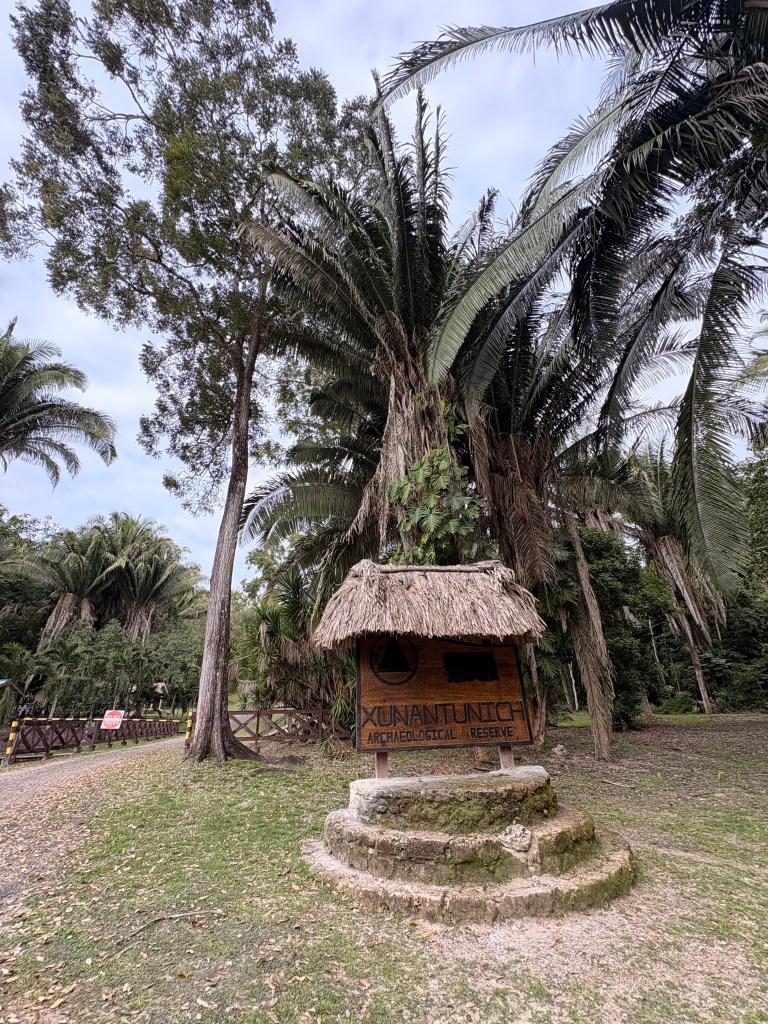
My first visit was on a quiet Friday morning in February. I woke up and walked into San Ignacio, grabbed a coffee and some breakfast and fetched a cab out of town. It is a quick drive, about 20 minutes west of town, to get to the ferry that crosses teal waters of the Mopan River. Not long before you arrive, you can actually see the top of the tallest structure, El Castillo. Most people drive or take a bus/taxi to the welcome center once crossing the river, I decided to take my time and walk the 1 mile or so up the hill birding along the way. The morning sun was growing warmer by the minute.
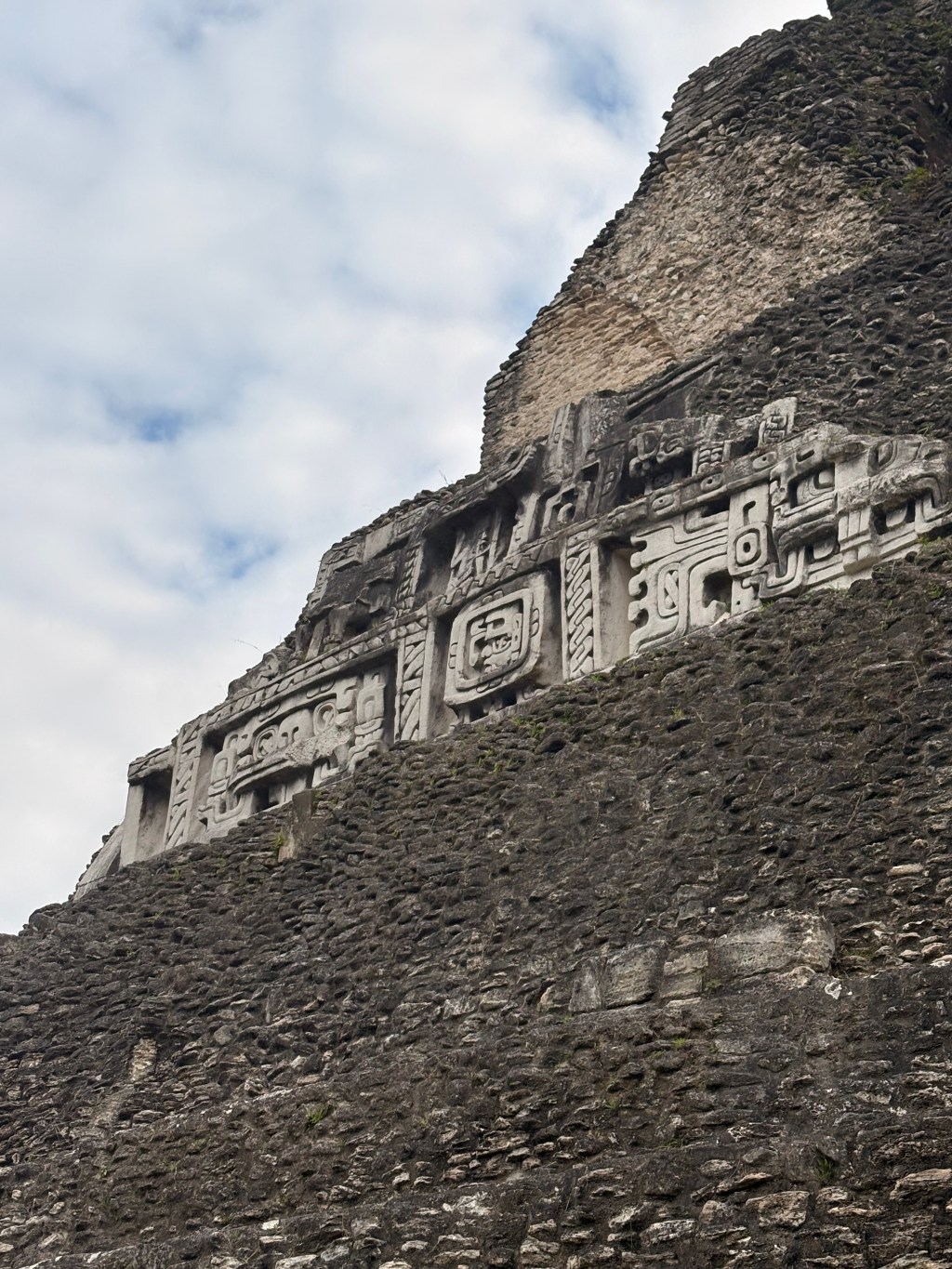
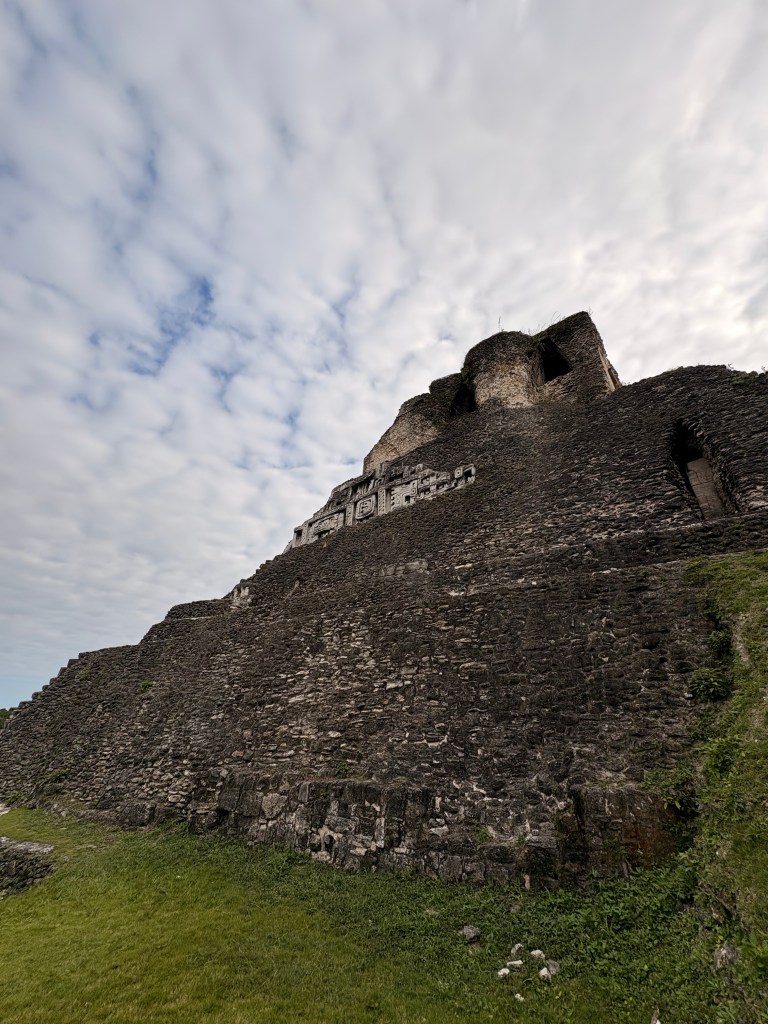
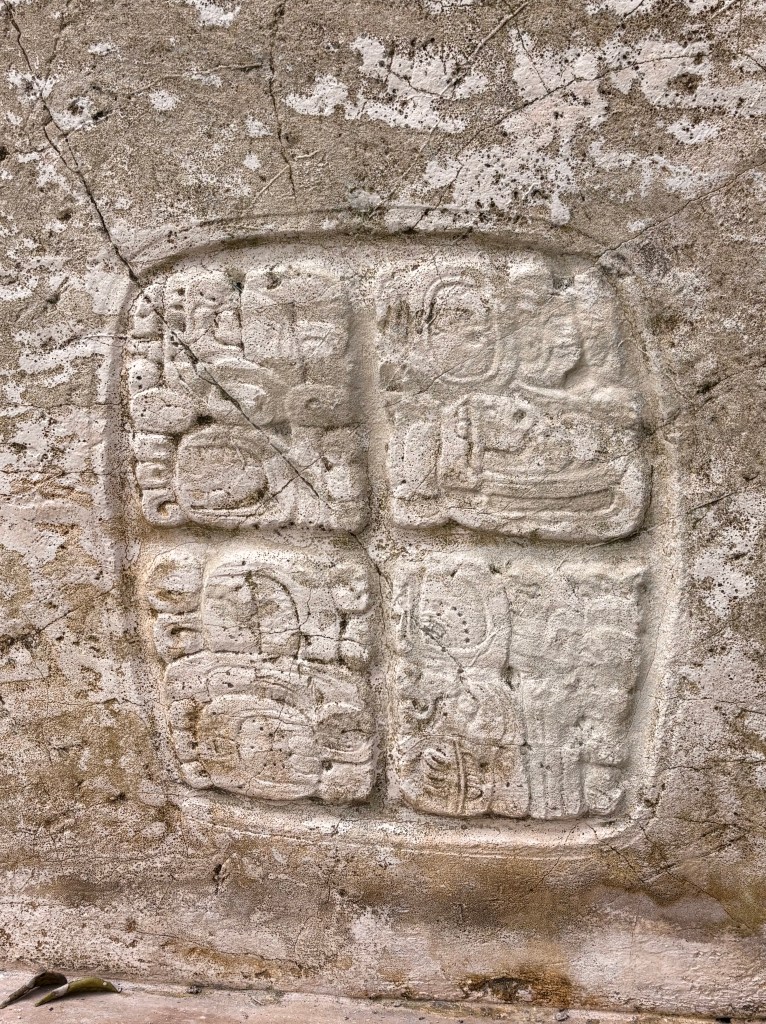
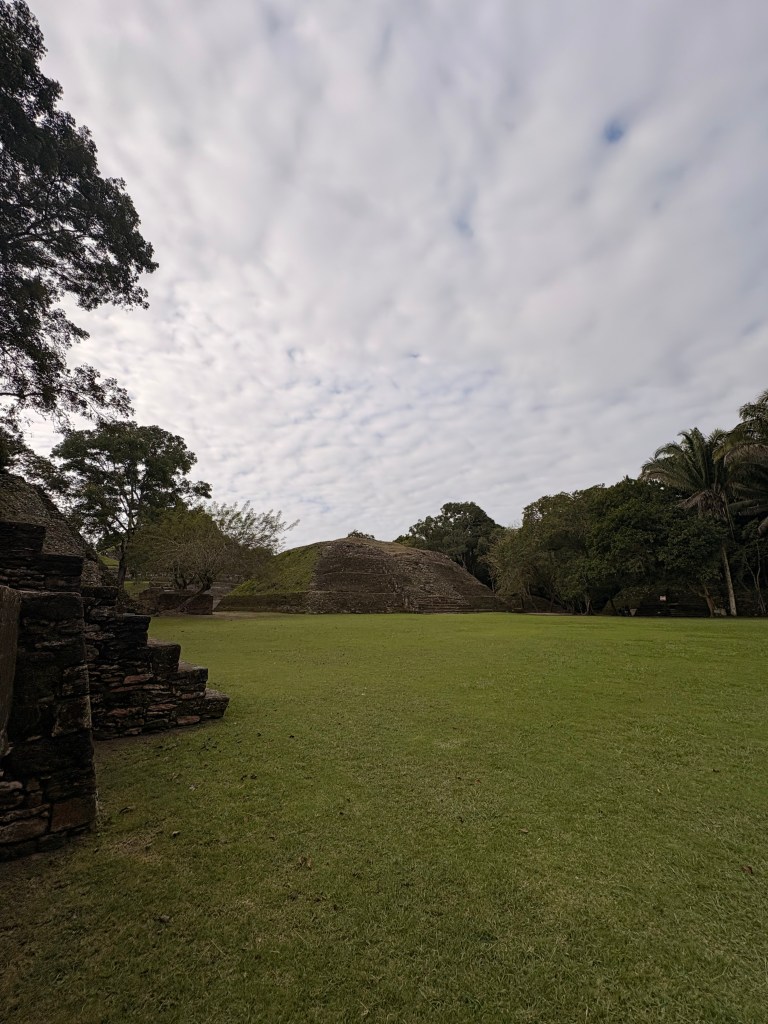
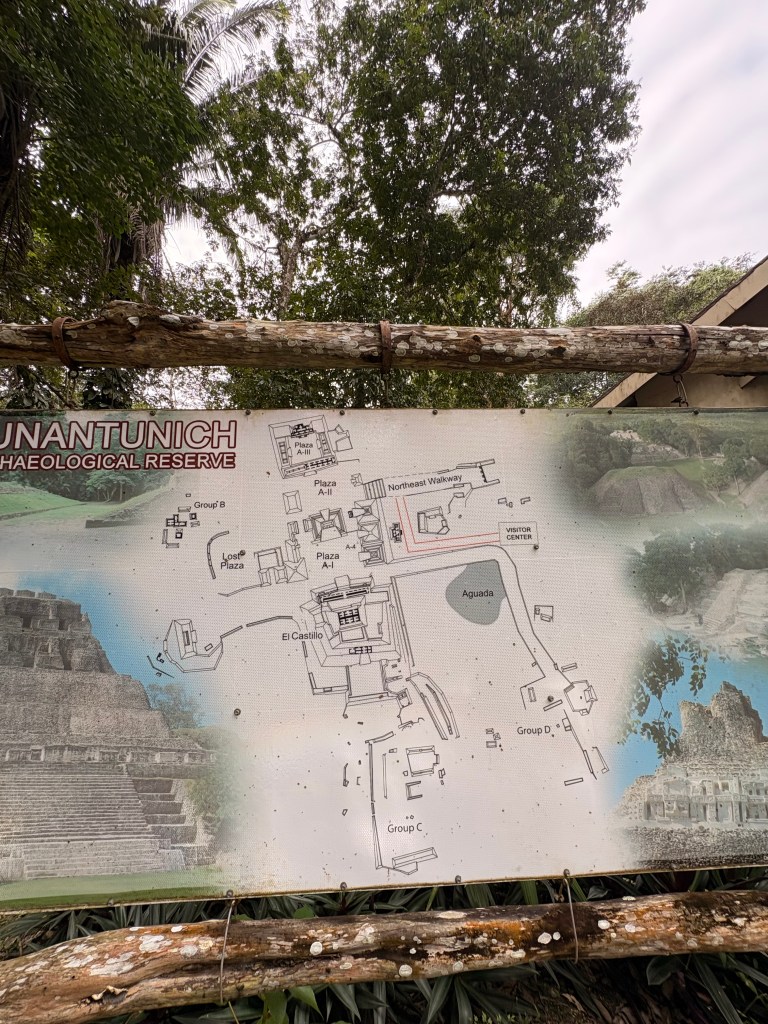
Before long, I arrived at the welcome center. I paid my entrance fee, politely declined a guided tour, and made my way toward the main plaza. I stopped briefly at a small building with informational signage, taking in some of the site’s history before heading off to wander the empty plazas. If not for the blue skies and bright sun, it might have felt eerie, standing in such an ancient place with so few people around. That’s the reward for getting up early at sites like this. Almost immediately, I was taken aback by the towering structures and the intricate detail of the stelae carved into the sides of El Castillo.
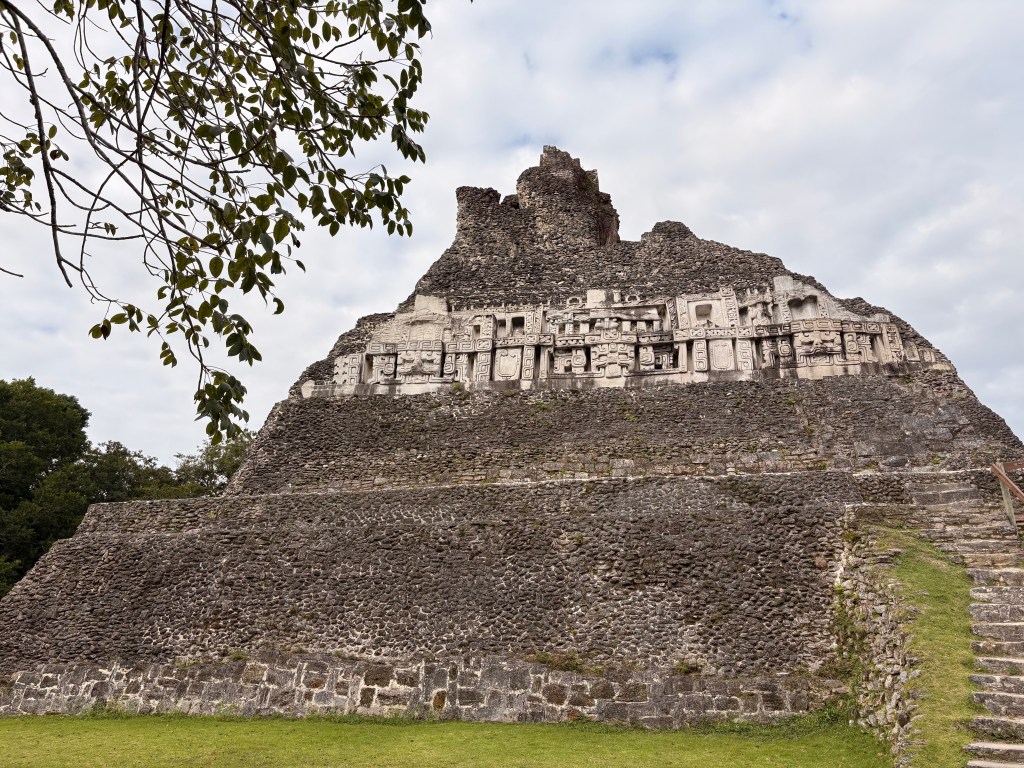
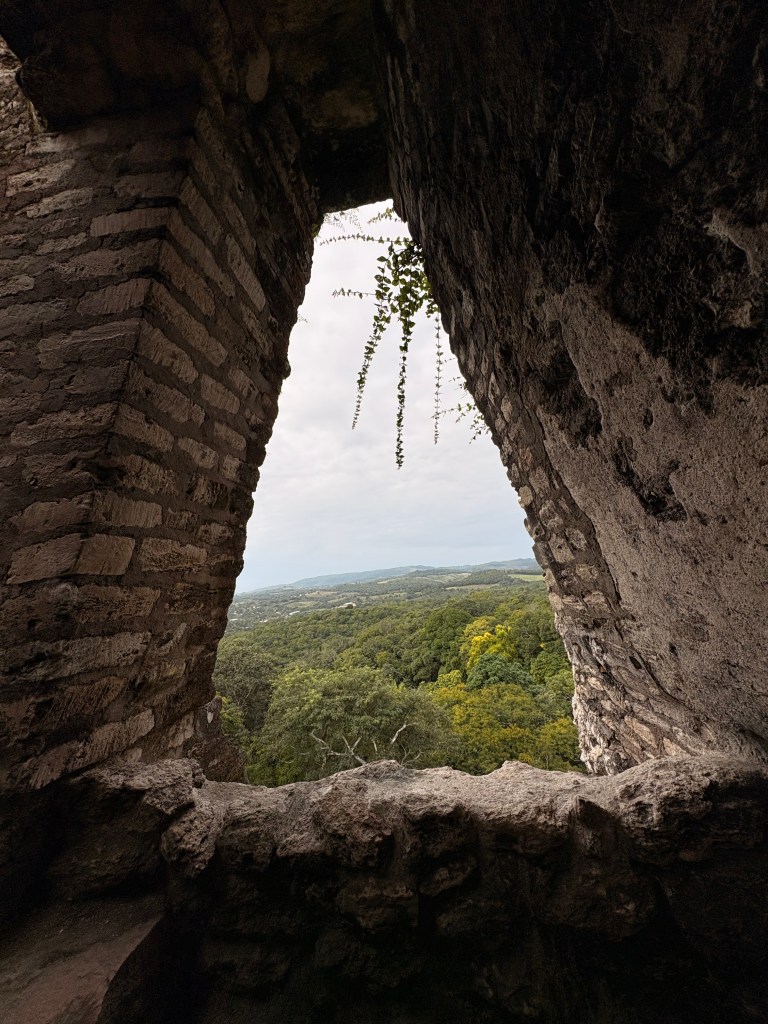
Nearly every visitor to Belize may recognize the giant structure when gazing up from the grassy central area. El Castillo is the structure that inspired the logo for The Beer of Belize: Belikin. After walking around in the hot sun for a few hours, I would certainly head back to town to grab one, or two. I made my way to the the top of the famous structure, stopping along the way to snap closer photos of the craftsmanship, stelae and surrounding structures down below. What a privilege it us to still be able to scale these monuments. And what a privilege it was to have the top all to myself, at least for about 15 minutes until the other park visitors began to arrive. Even still, it was a very quiet visitor experience unlike more popular places such as Chichen Itza or Tikal.
I spent a couple hours walking the grounds, eaves dropping on nearby tour groups for a bit more extra information and taking photos of folks that asked for a hand in getting a good group shot. Always happy to help! Soon, as the park began to see more visitors, I headed back to the welcome and started my walk to the ferry. The very next day I would be visiting the incredible site of Caracol.
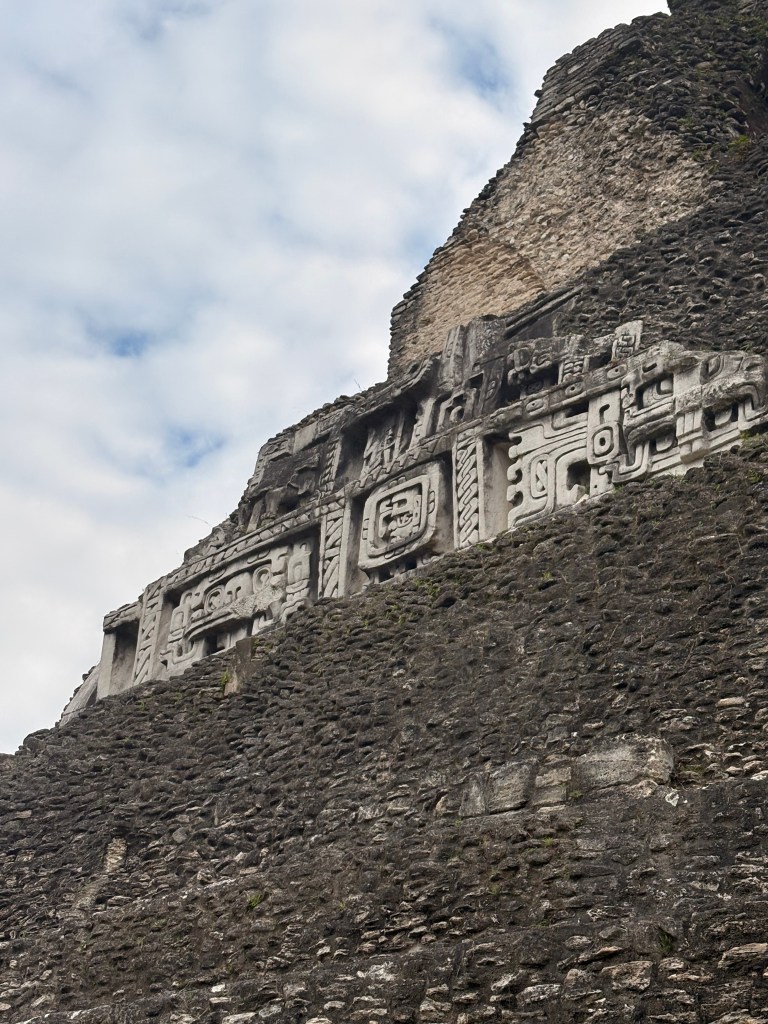
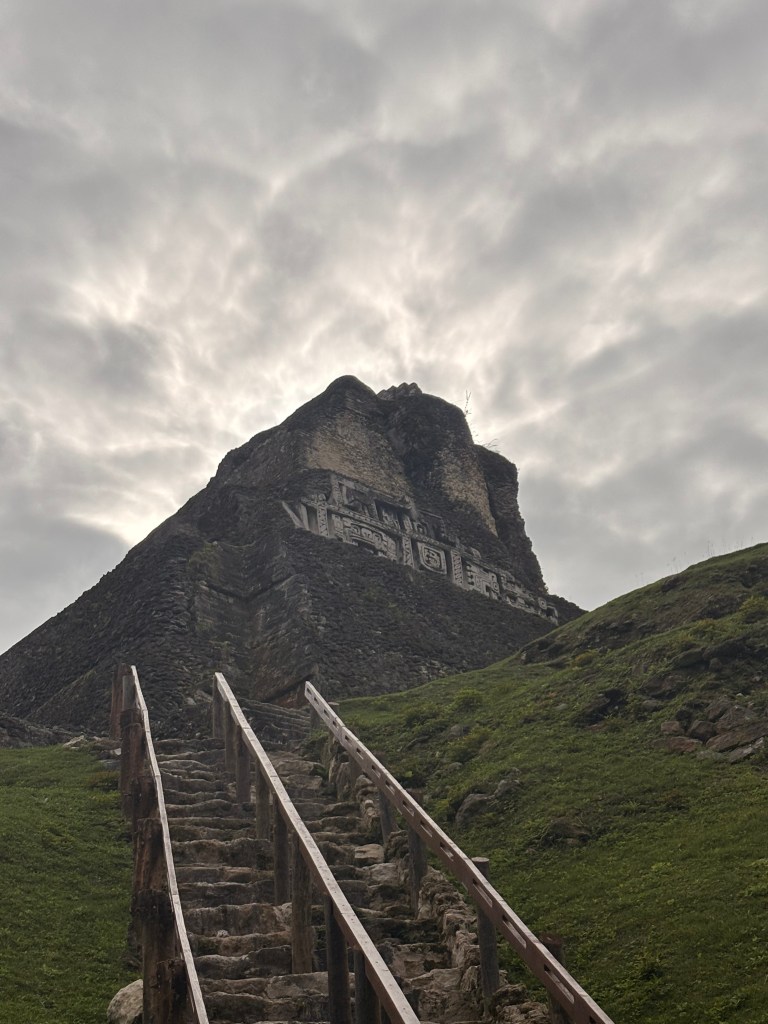
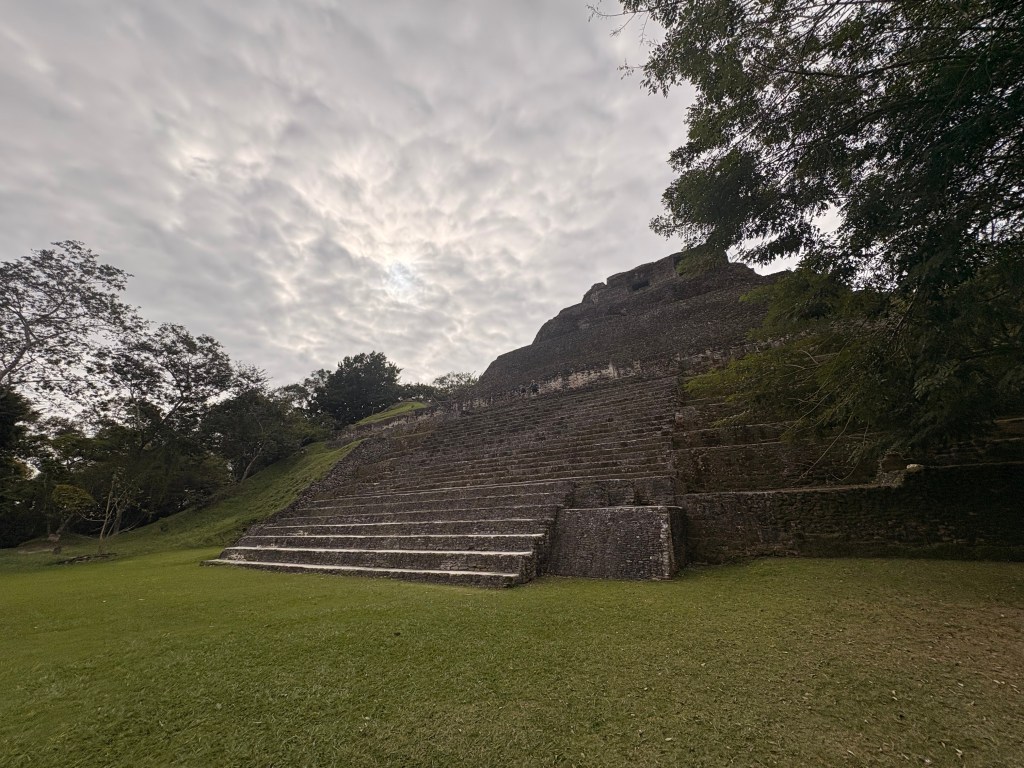
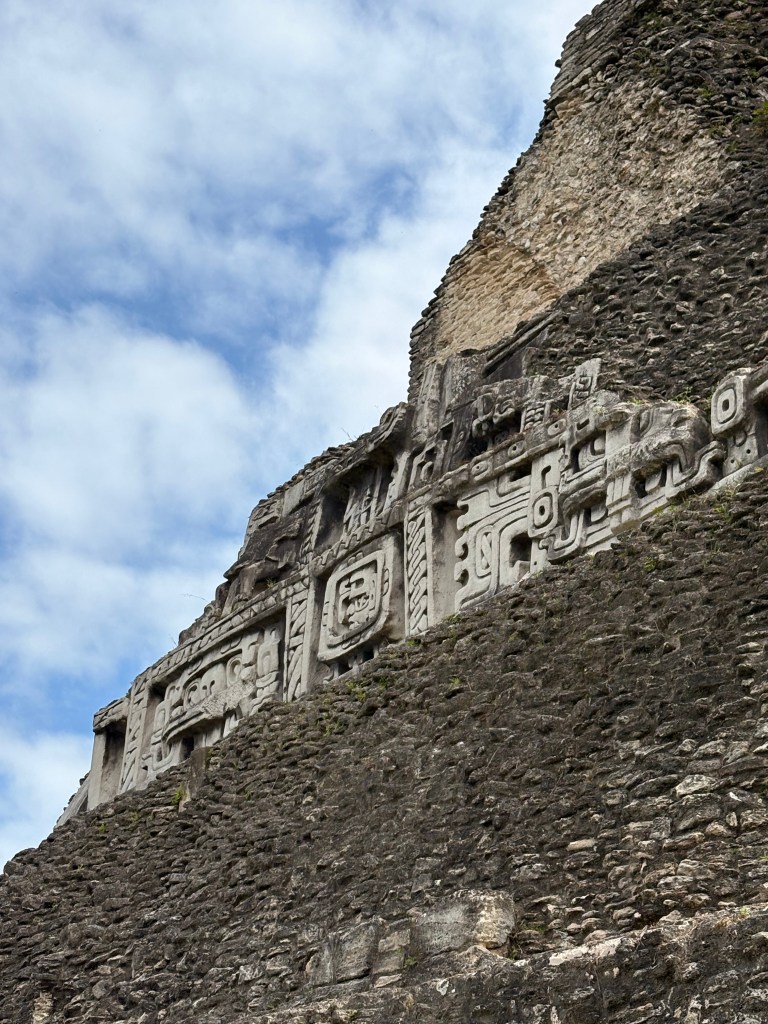
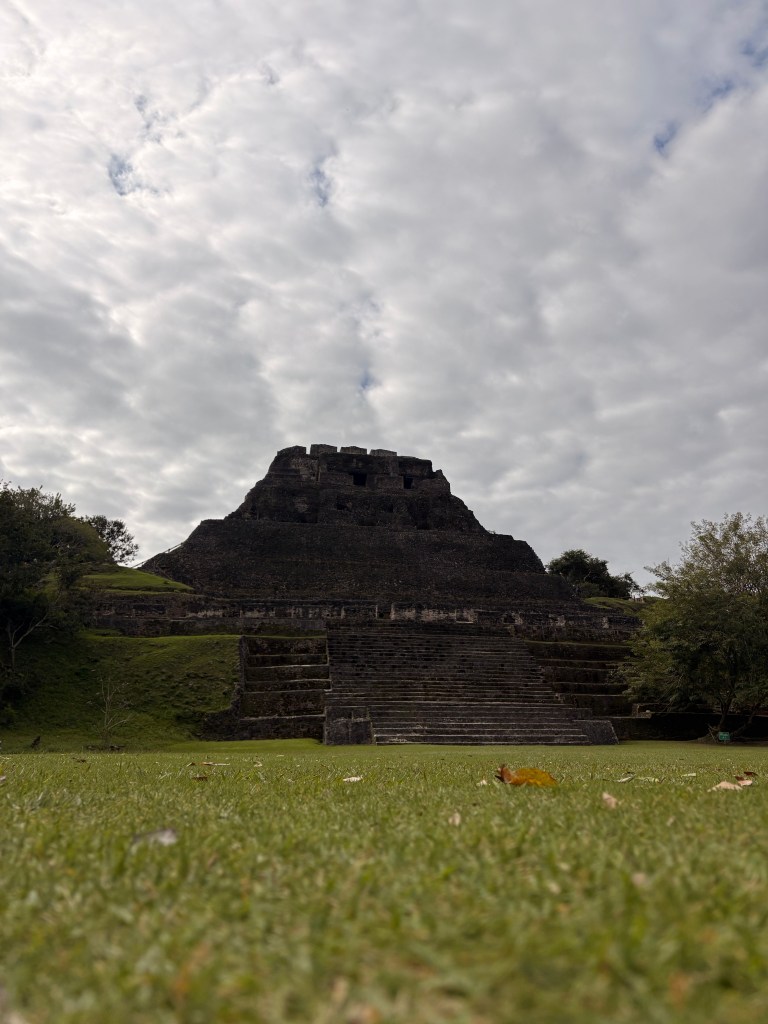
My sister, her husband and I woke up early on Saturday. We had a scenic 2 hour drive into the Chiquibul Forest Reserve to get to the hidden site of Caracol. A much smoother drive now, the road was only recently improved from dirt jungle roads starting back in 2019. The scenery along the way was breathtaking, we did some roadside birding from the car along the way. We arrived 10am, the small parking area already had a few cars parked. Due to its location, Caracol is also not as visited as more famous Mayan sites despite being a rather large and very impressive complex of structures.
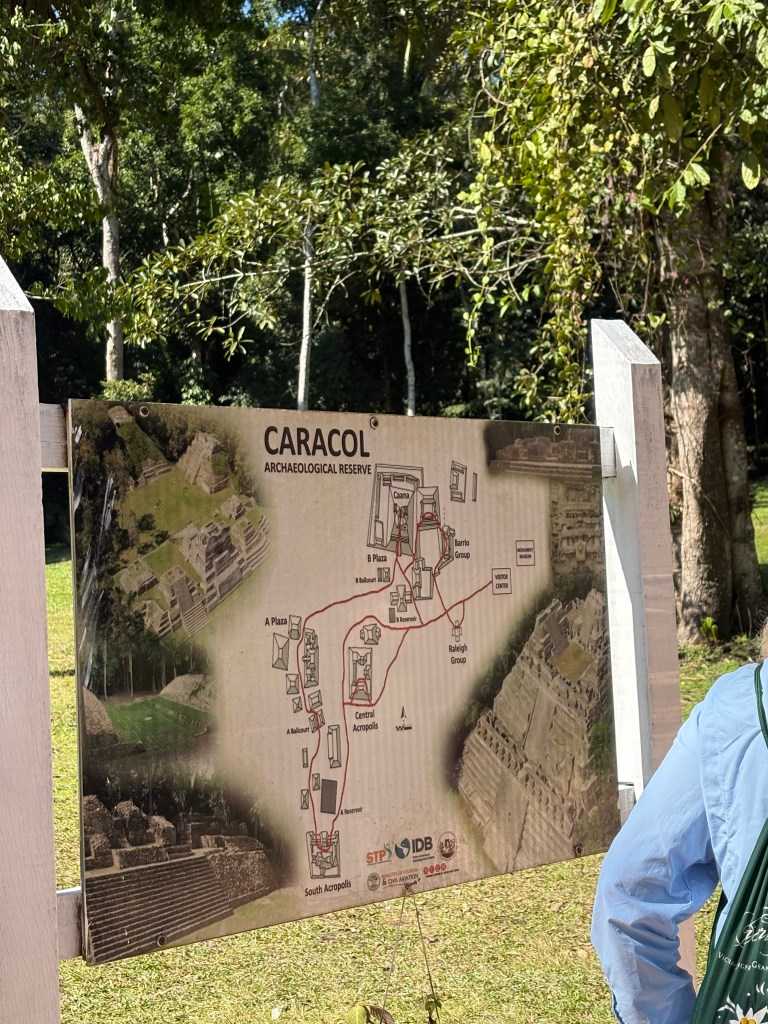
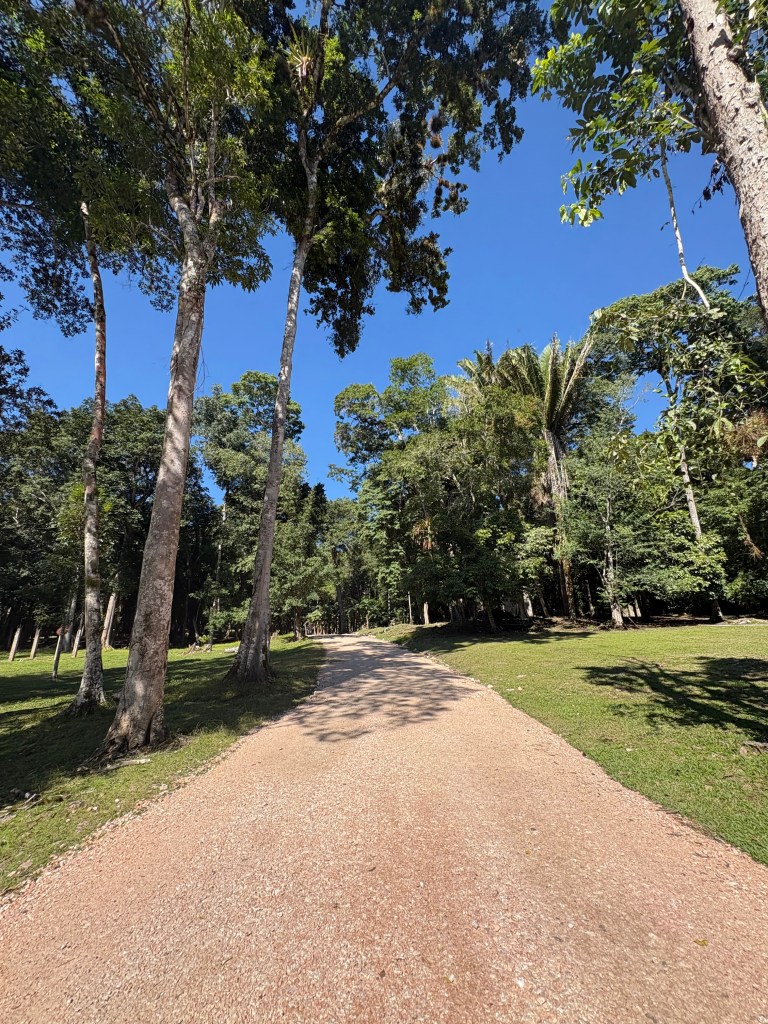
We walked through a tunnel of towering Ceiba and Mahogany Trees. Due to its more remote jungle location, the opportunity for wildlife viewing here makes for a fascinating day of history and animal experiences. while exploring the ruins, we encountered Lineated Woodpeckers, Montezuma Oropendolas, Howler Monkeys and Spider Monkeys to name a few.
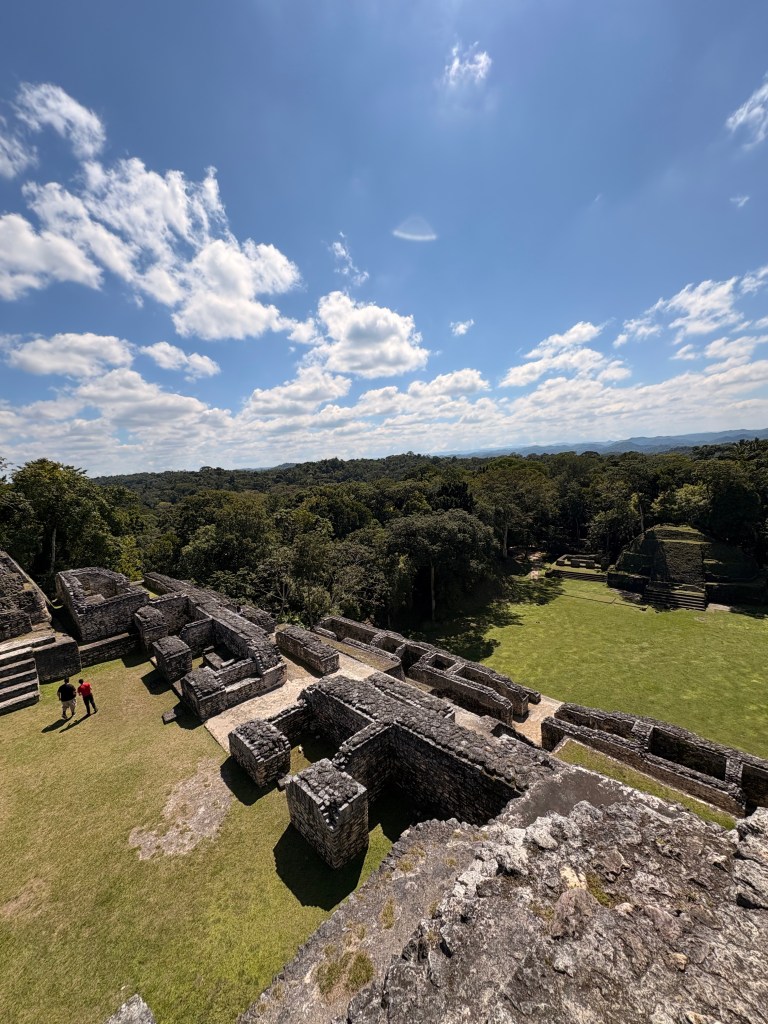
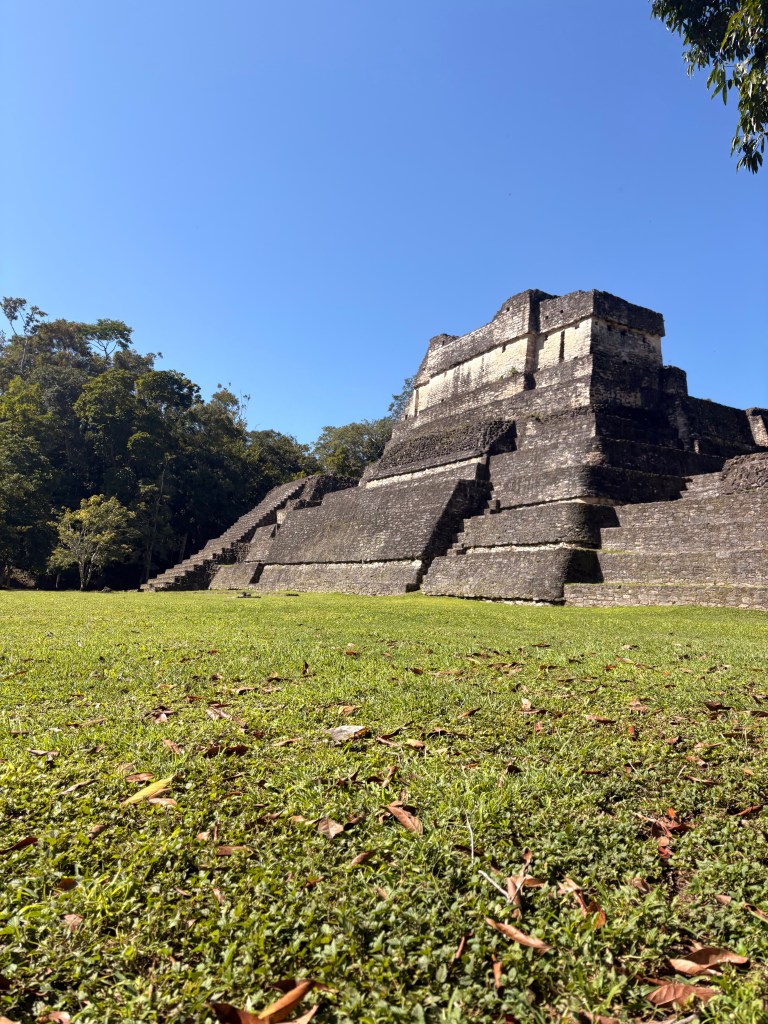
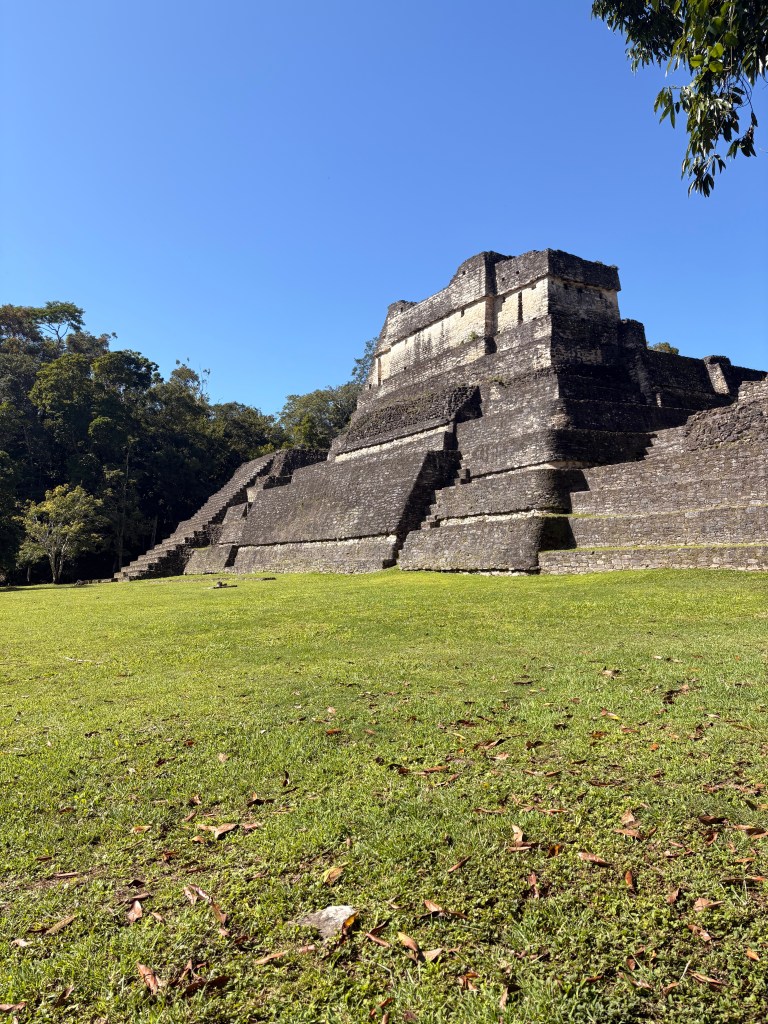
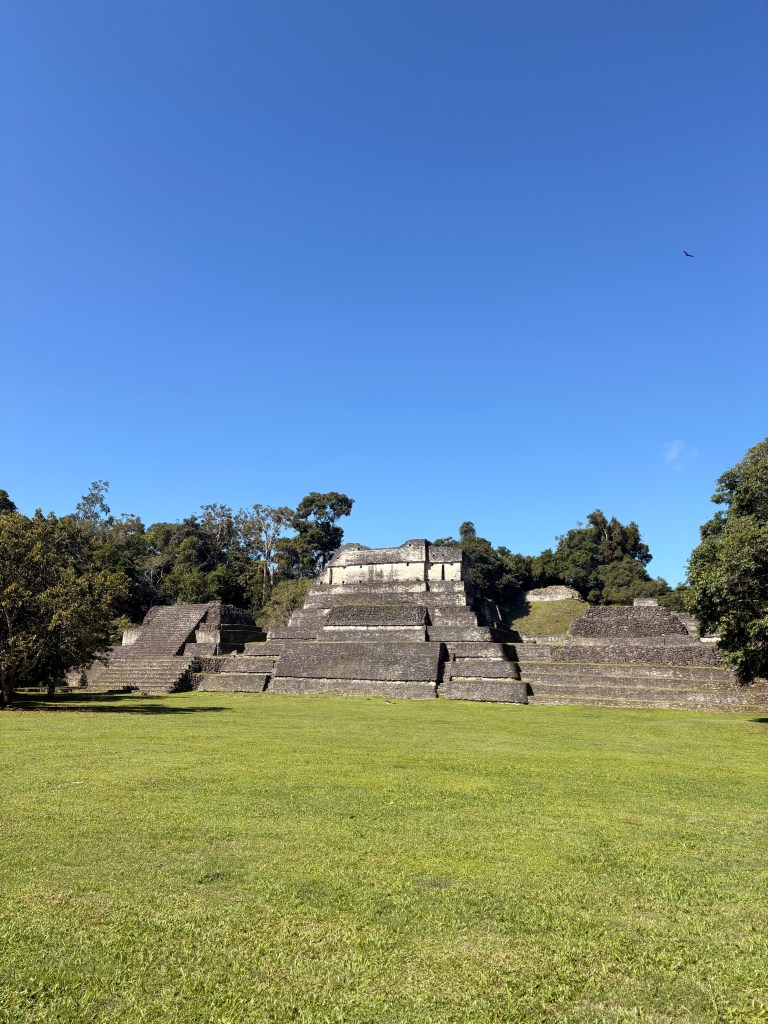
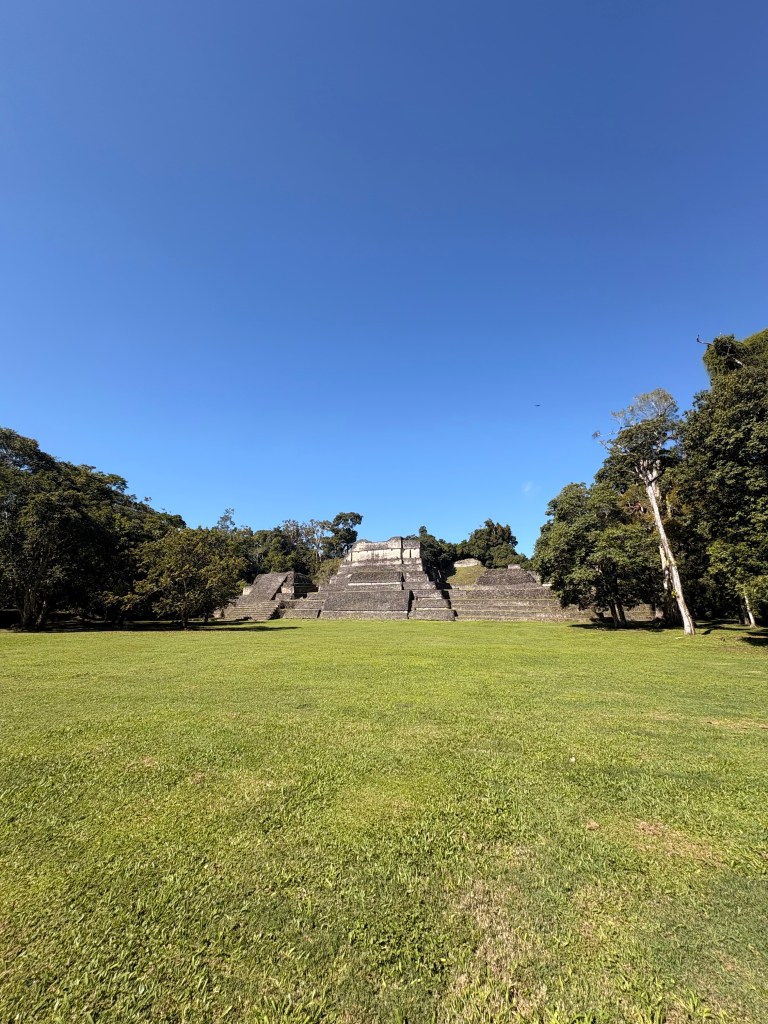
The first structure seen upon arriving at the end of the access trail is a towering temple called “Caana” meaning “Sky Temple”. It rises 141 feet above the ground, making it the tallest man-made structure in Belize. Impressive to say the least. I snapped a few pics while admiring the ancient pyramid. I would come back later to climb to the top.
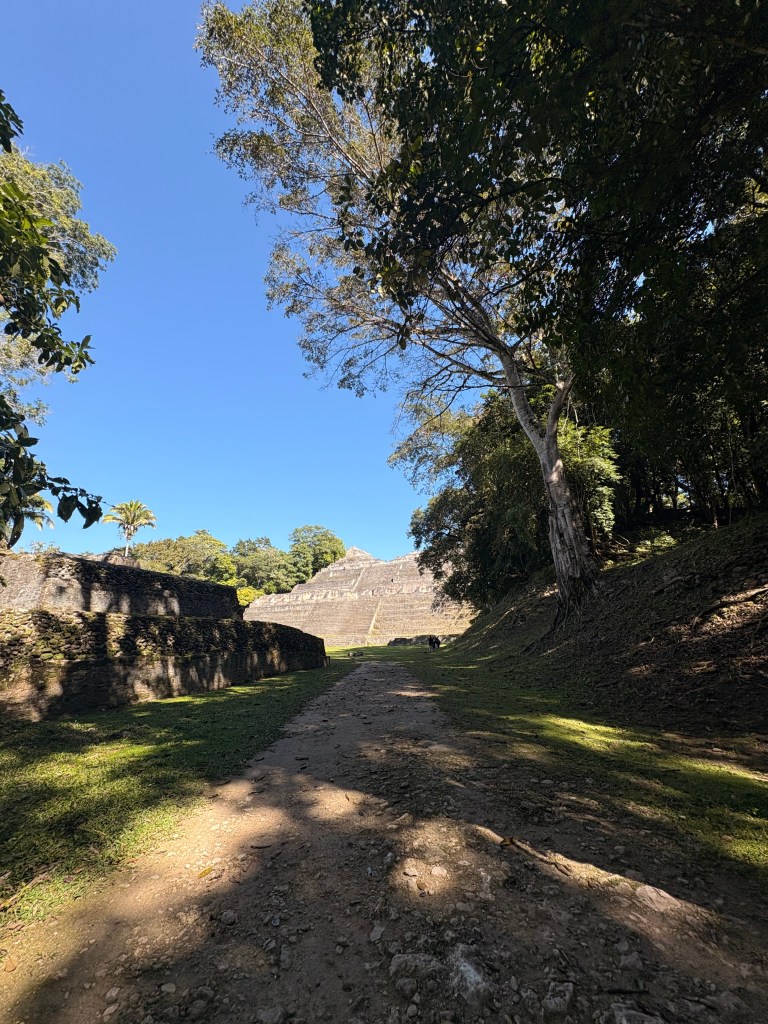
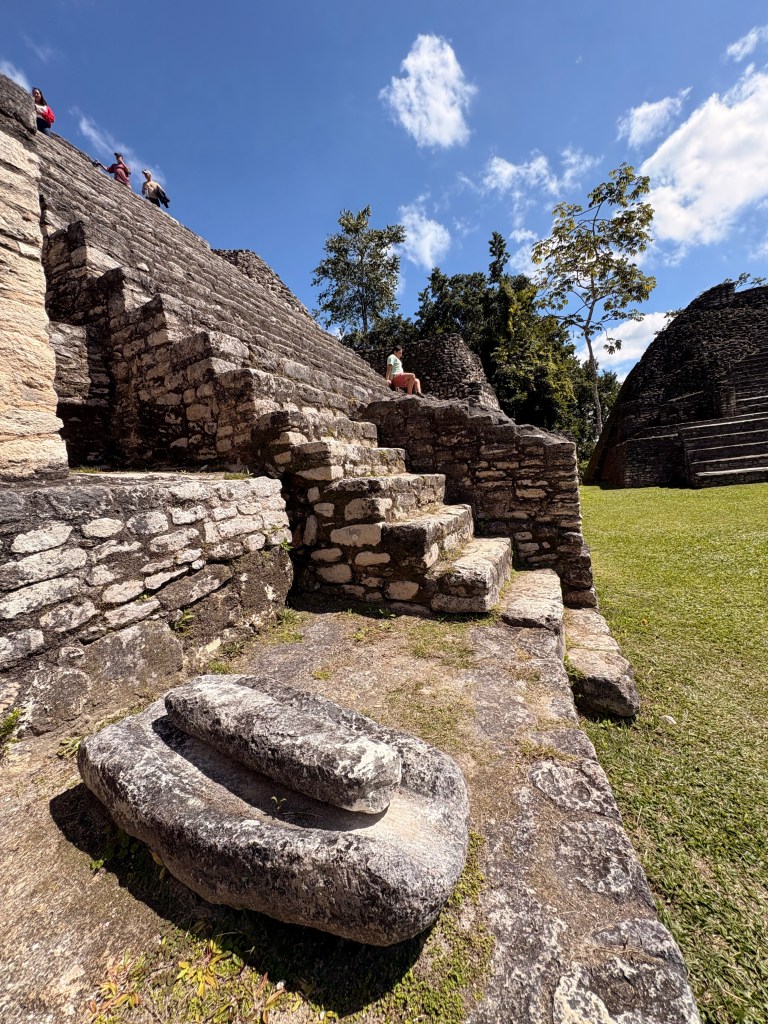
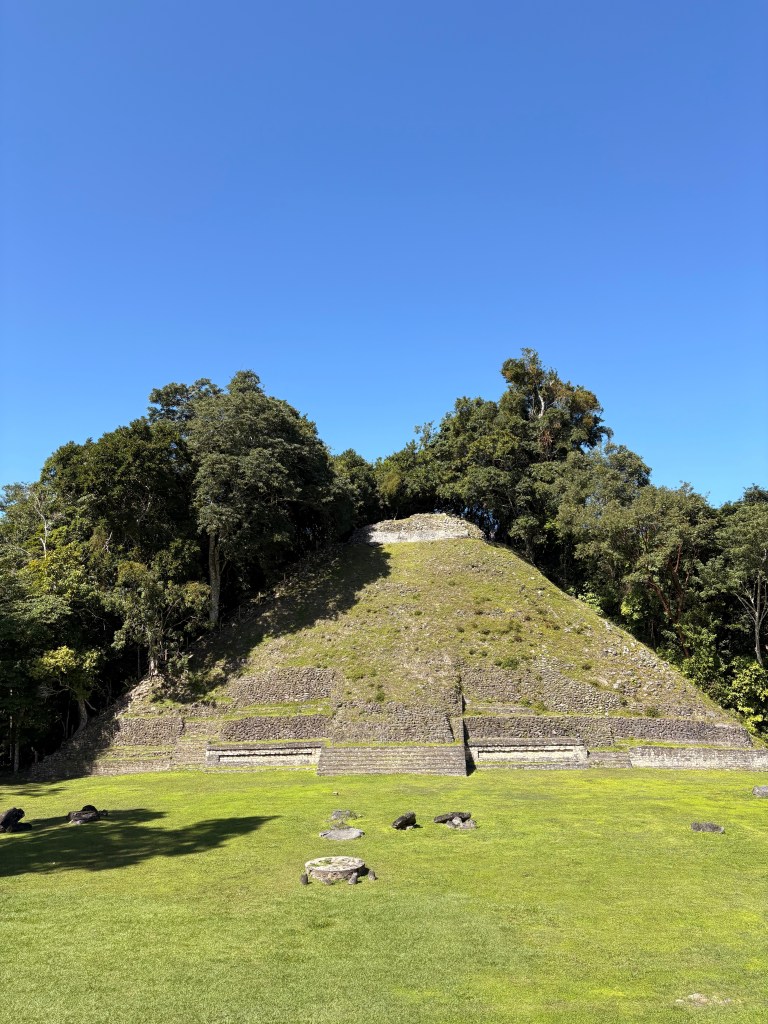
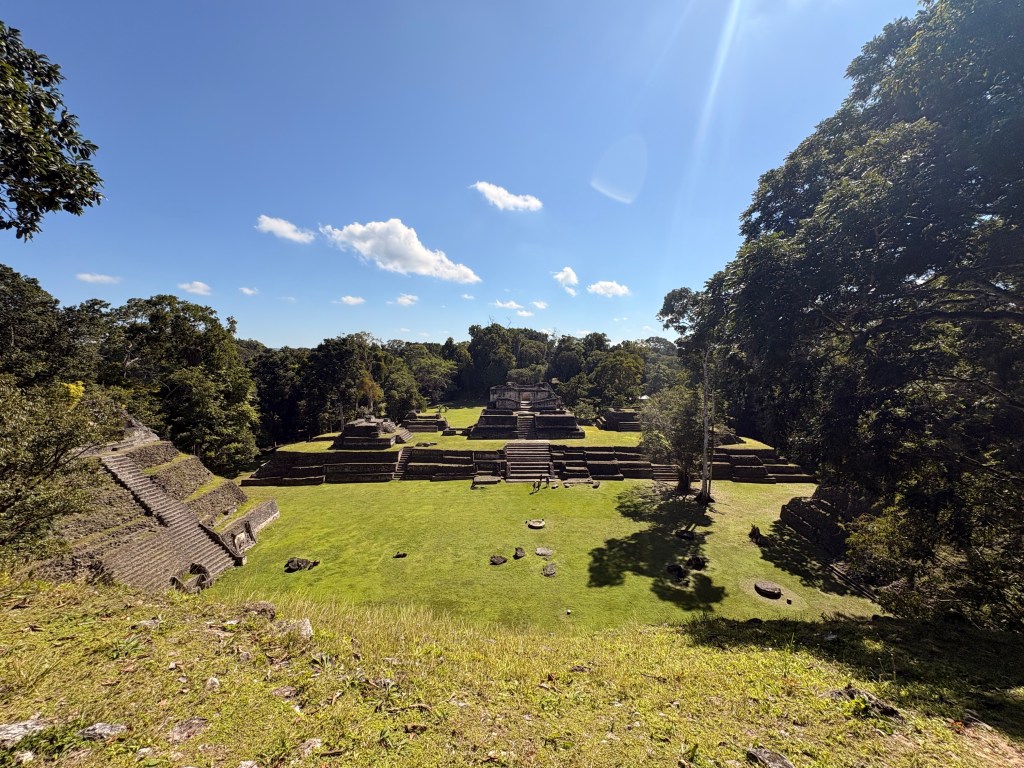
We made our way around the complex of smaller structures, plazas, reservoirs and ball courts. What an incredible feeling it is to walk amongst such fascinating ancient architecture. Trying to comprehend the scale of the Mayan Civilization at its height is mind-blowing. I have a deep appreciation for those dedicated to uncovering, preserving and sharing what remains of their legendary history. Caracol alone may have held upwards of over 100,000 citizens in its jungle city. What is now ruins was once a bustling hub of humanity hundreds of years ago.
We wandered the grounds, marveling at the various structures, wondering how they were able to construct these magnificent buildings of stone with such precision. A group of Spider Monkeys swung their way past us as we were at the top of one of the pyramids, one of which was missing a tail. This was a wild sighting, considering how important their tails are to these monkeys. My sisters husband who works closely with the wildlife of Belize, had never seen such a thing before.
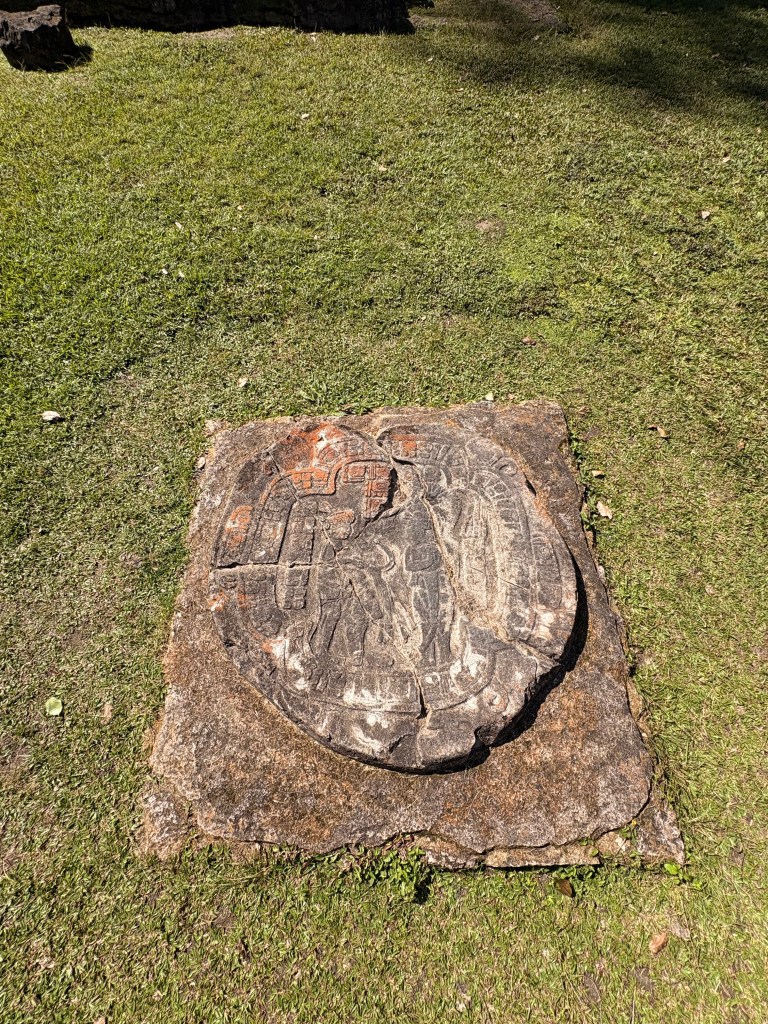
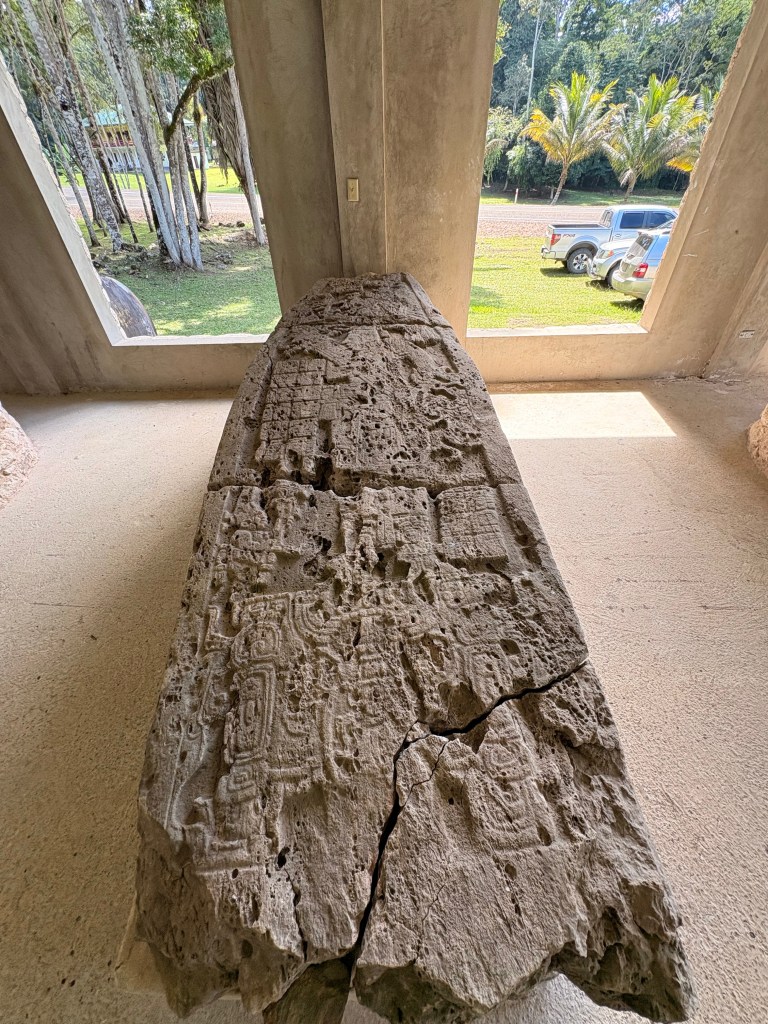
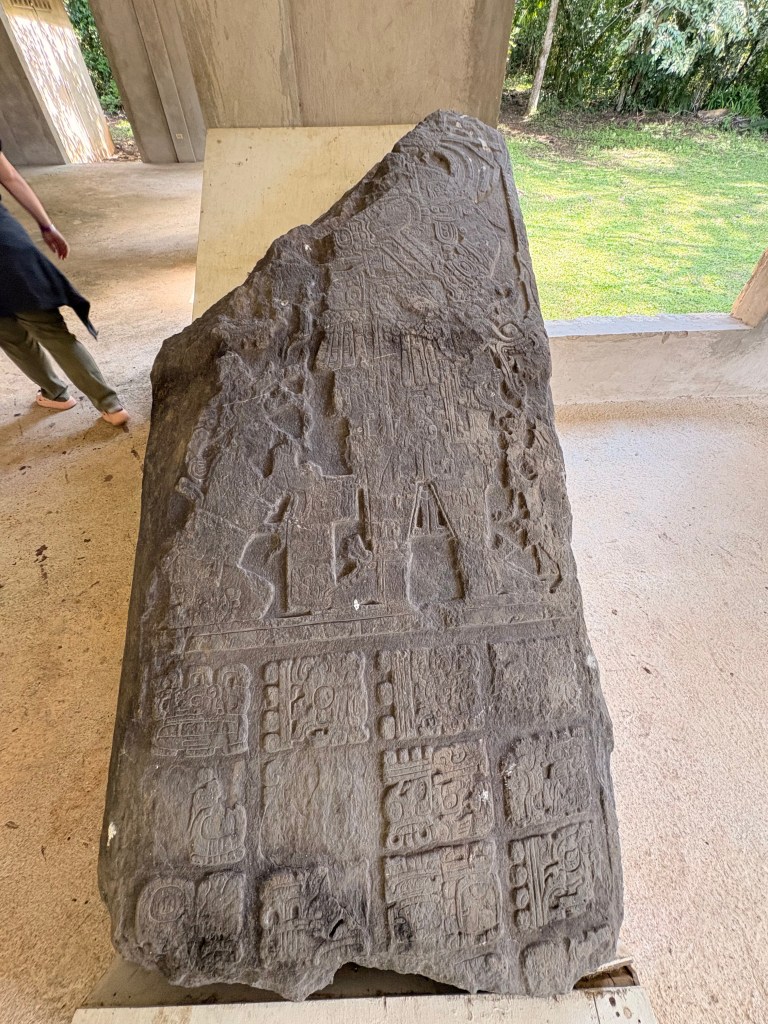
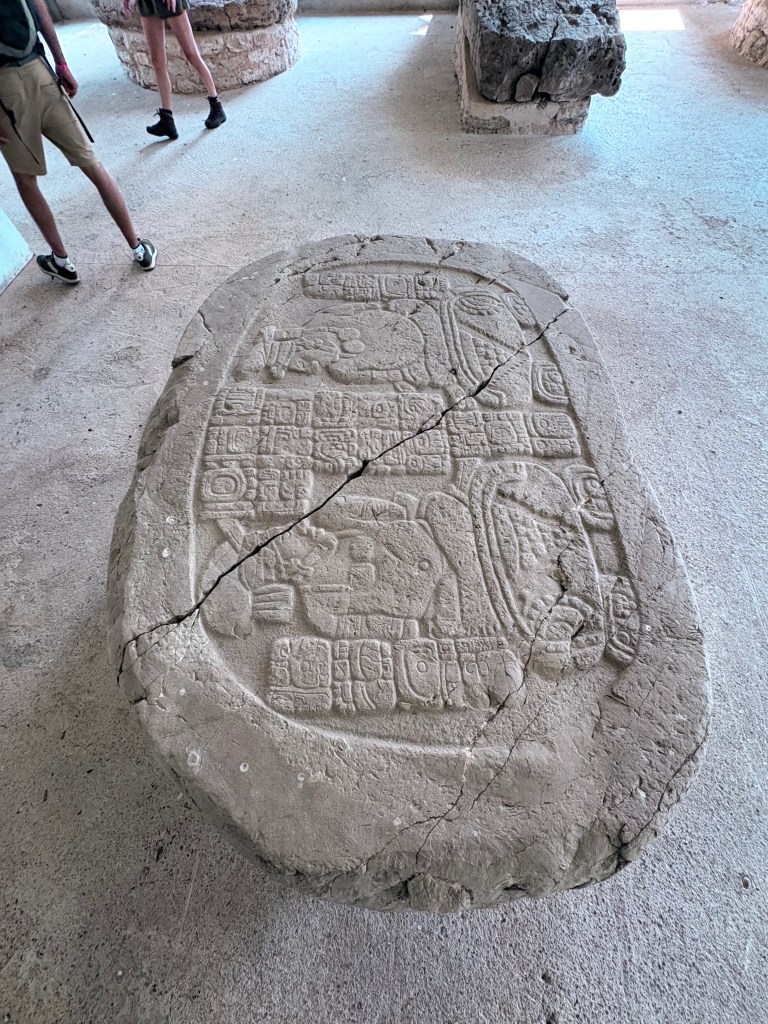
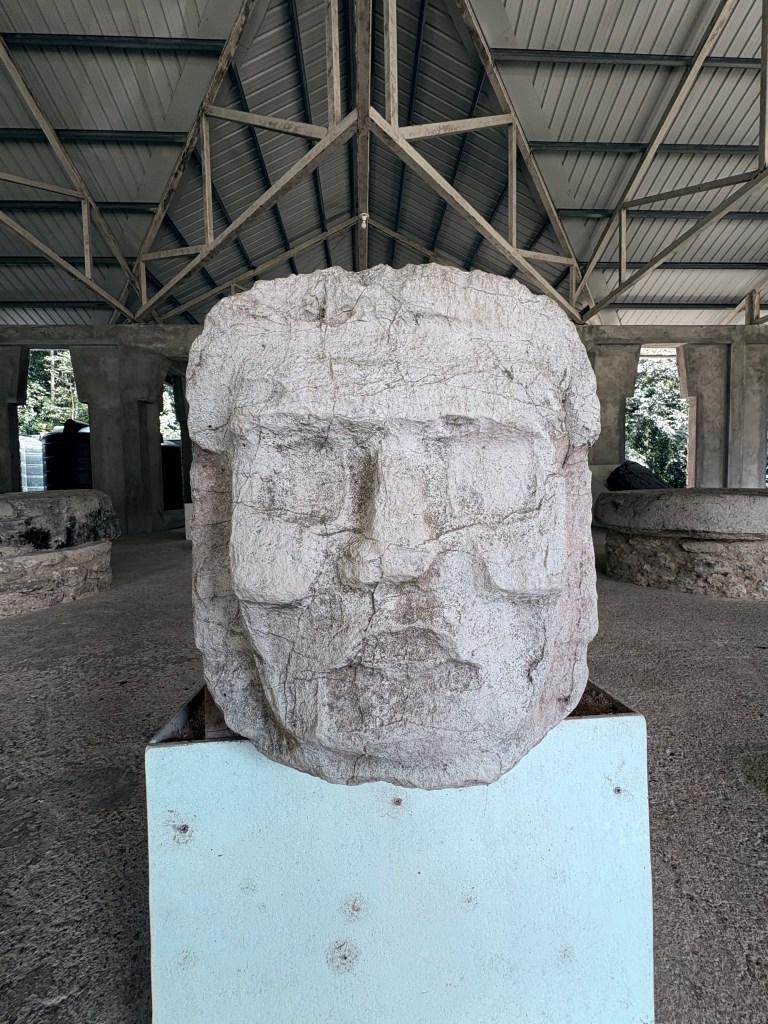
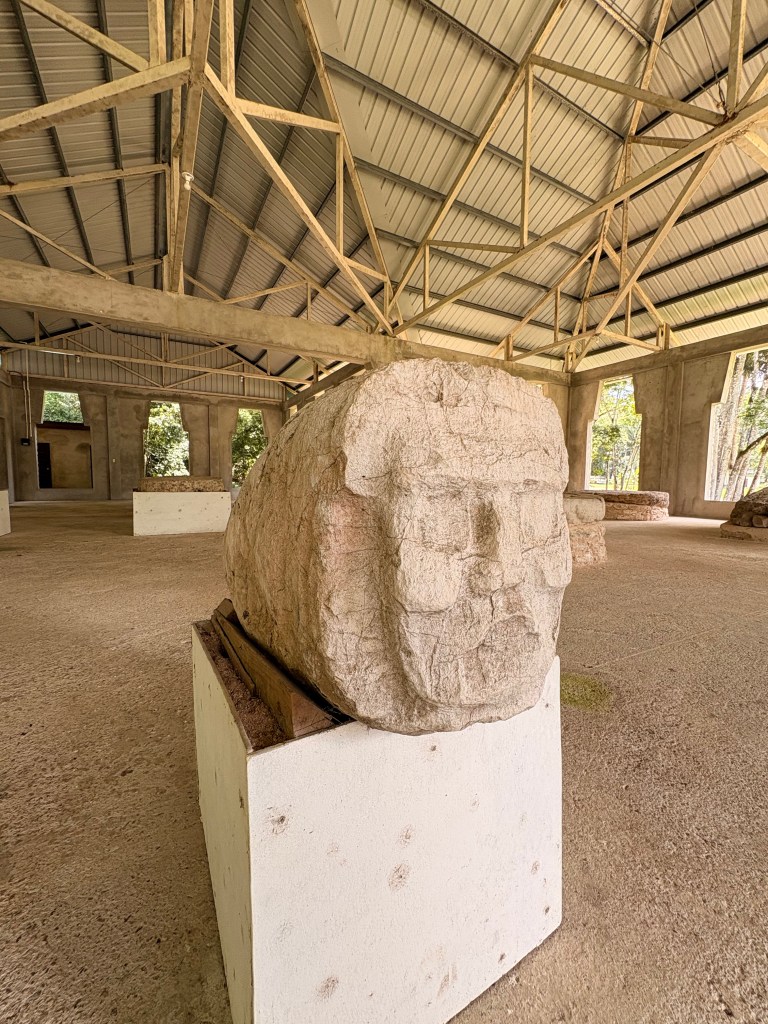
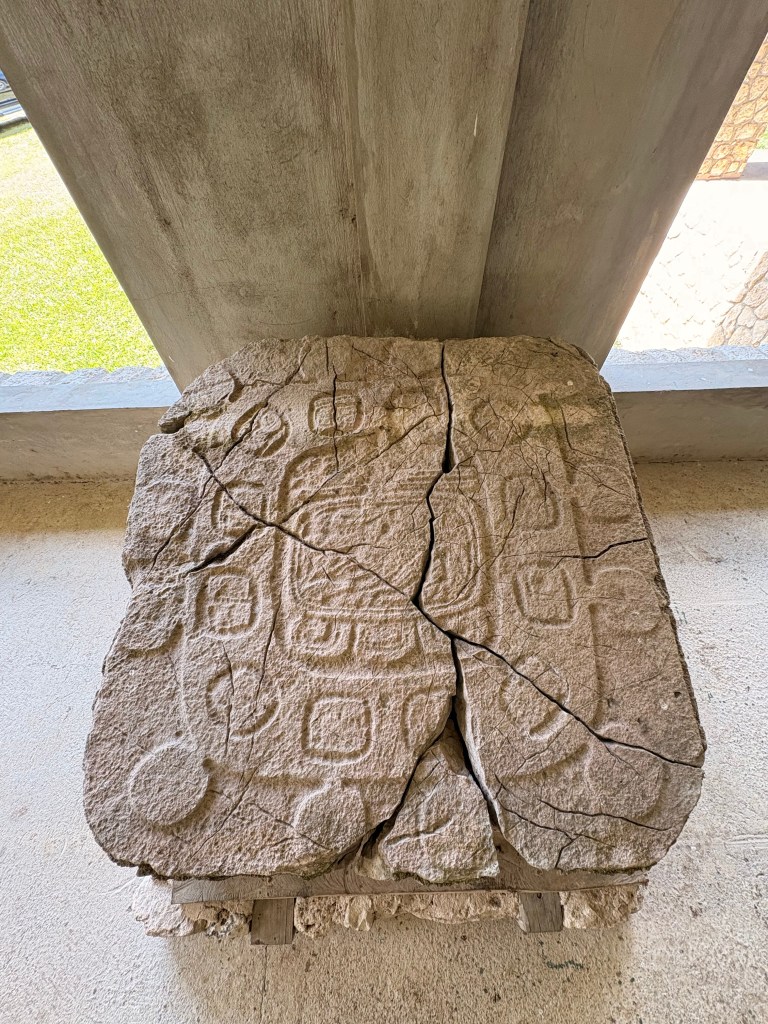
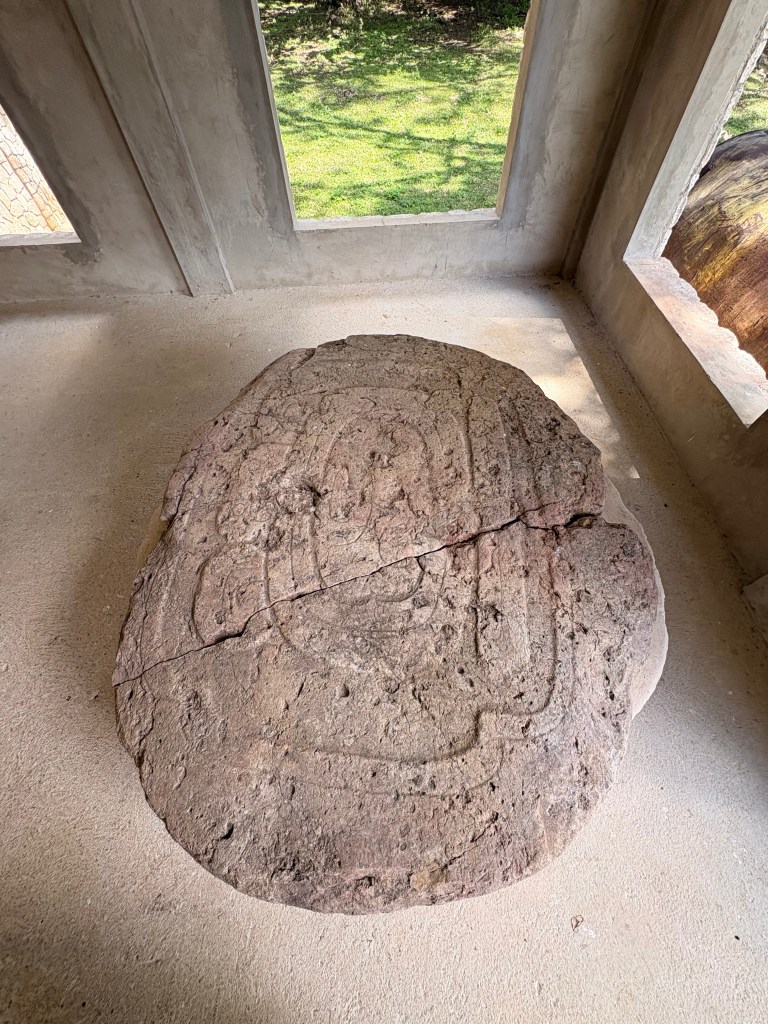
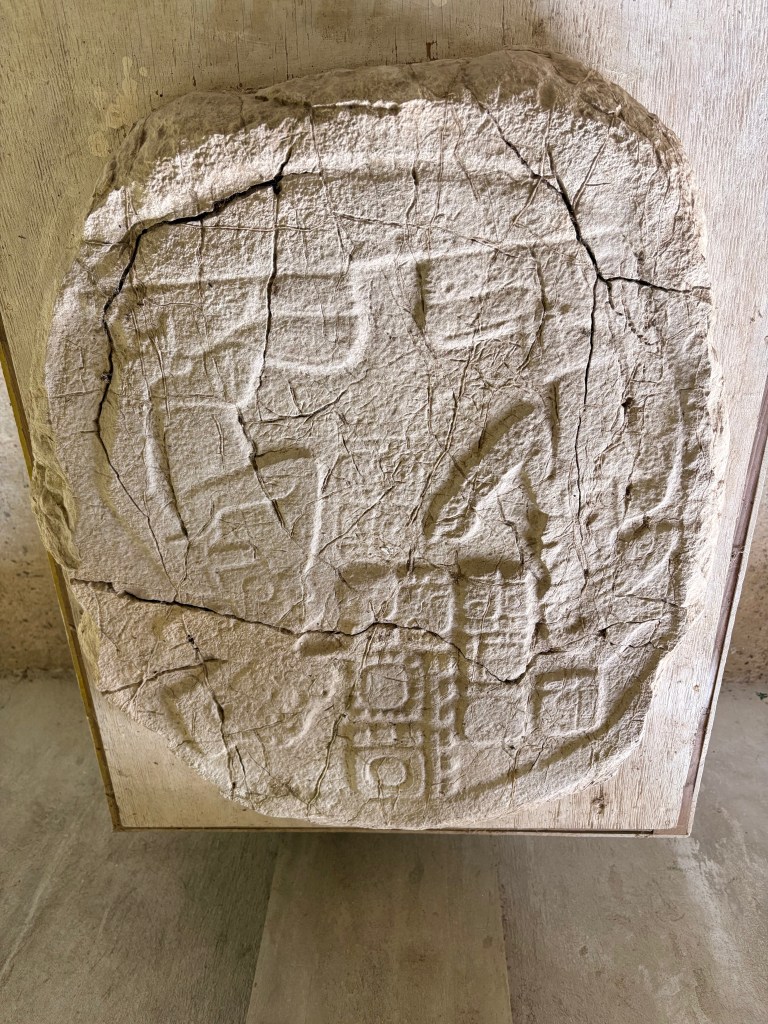
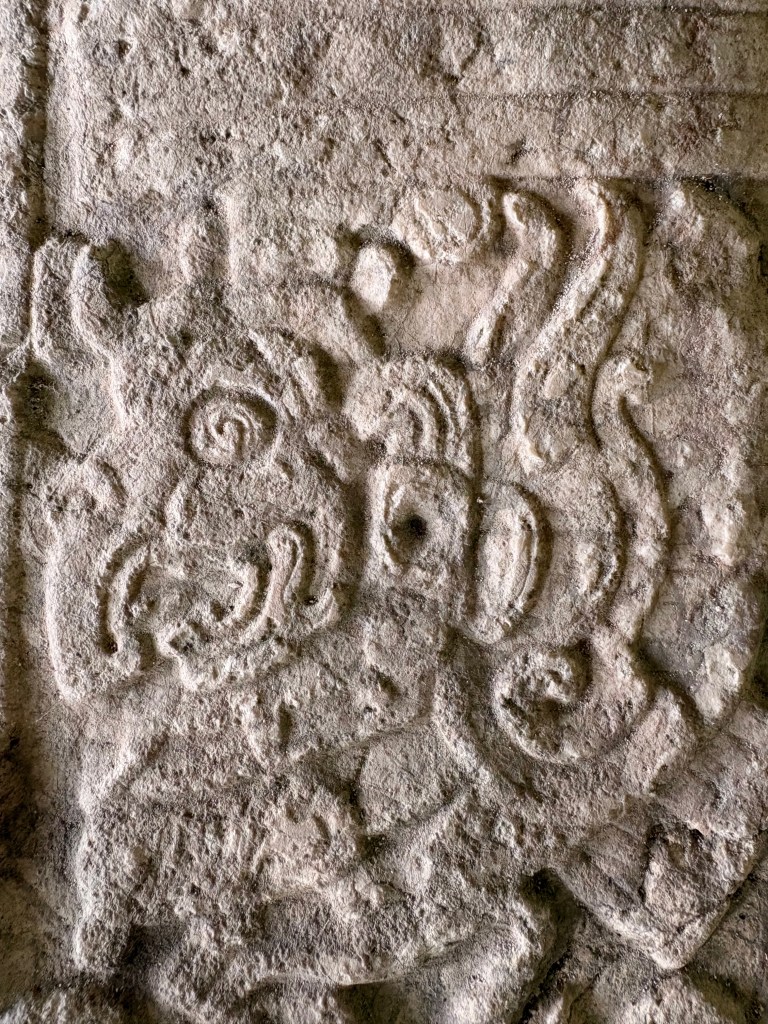
After Caracol, it would be about 3 weeks before I was able to visit the famous site of Tikal. Known my sci-fi lovers as the location where George Lucan and his crew filmed scenic shots depicting the jungle moon of Yavin-4 in Episode IV.
During my travels through Guatemala, I met and began traveling with a friend from Mexico, Ana. From Antigua to Semuc Champey and finally Tikal, we spent our time sight seeing, eating good food and enjoying delicious coffee. We were very excited to finally visit the Mayan site it seemed everyone was talking about. Tikal sits in the Mayan Biosphere Reserve, the largest protected area in Central America at over 8,000 square miles. Tikal is just one of hundreds of protected sites in this reserve. Many visitors come for the dazzling sunrises or spectacular sunsets atop the well known pyramids. We settled for just a normal visit during the day.
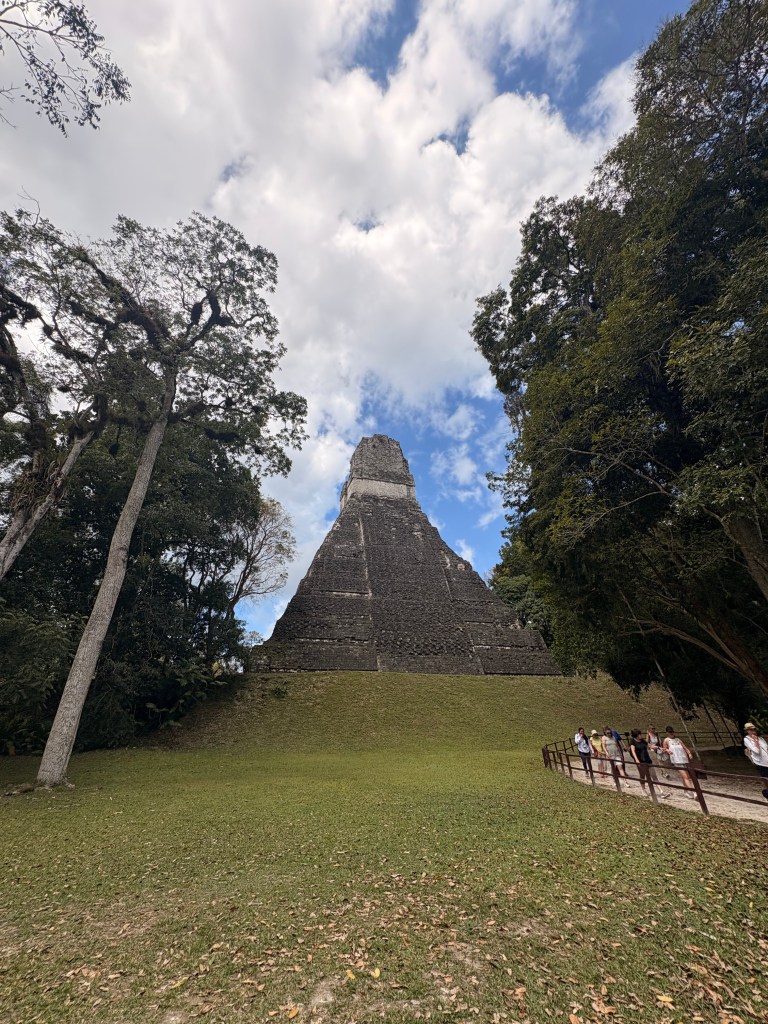
We hopped on the bus around 8am in Flores, Guatemala. Along the way, our guide told us some general history of the Maya, as well as told us about much of the flora and fauna surrounding the area that we may encounter that day. This part of the jungle is rich with wildlife. Coatis, Tapirs, Toucans, Monkeys and if we were very lucky the famous Resplendent Queztal: The National Bird of Guatemala. A few weeks prior to our visit, there was a rare and exciting encounter with a Jaguar that snatched up a Coati just a few feet from a group of tourists. The video went viral and was very popular among the guides.
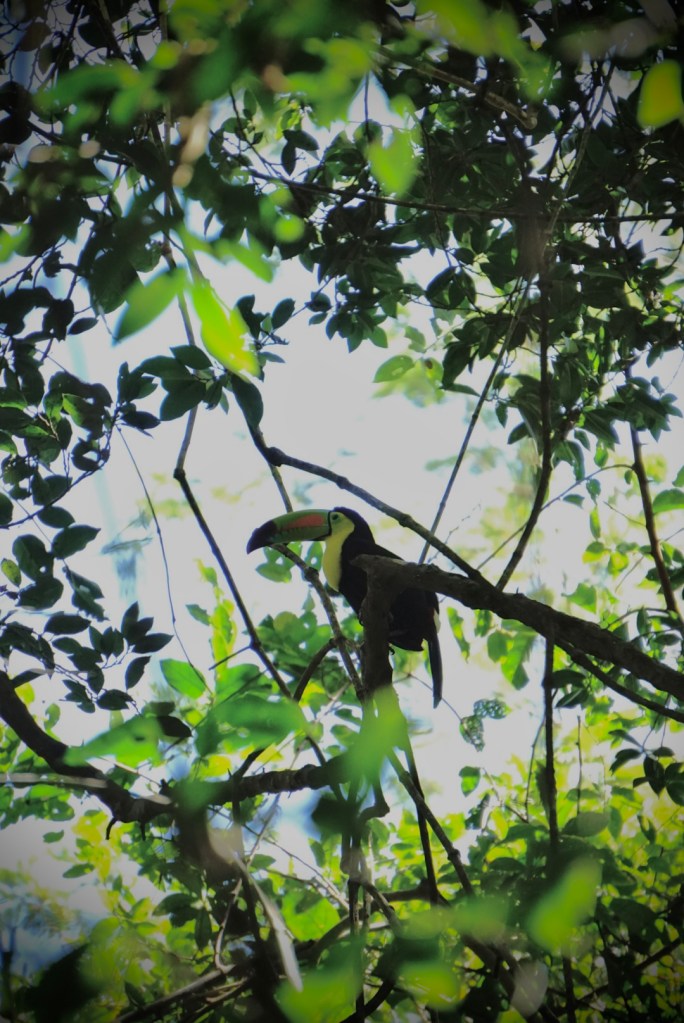
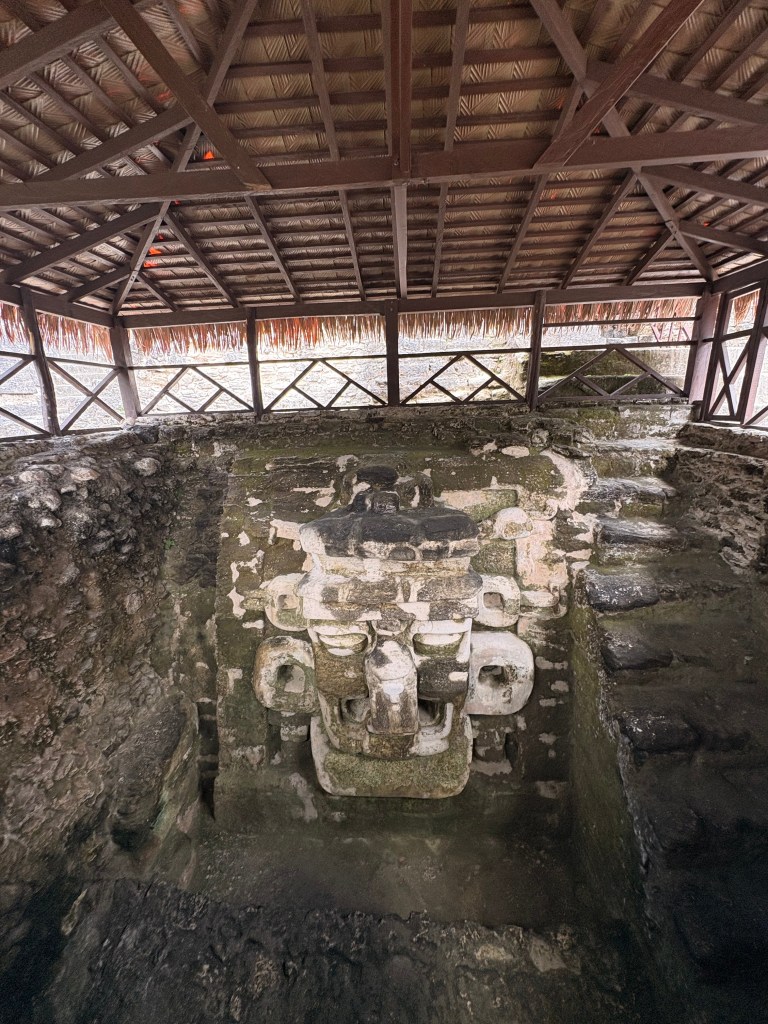
We opted in for a guided tour, this site was the largest of the 3 I had visited and I was interested in learning as much as I could about the Maya. It was worth the extra money, our guide was very informative and fun. Much better than aimlessly wandering around the grounds and gazing at the temples. We were greeted with towering Ceiba trees, dense forest and a lone Toucan sitting in a tree as we made our way to the plazas. Even the smaller structures were quite impressive. The Maya were masters of design, both visual and acoustic. If you stand directly in front of the structures in the right spot and clap, you can hear the sound of a Quetzal’s call echo back to you. How they figured that out is beyond me. Truly remarkable.
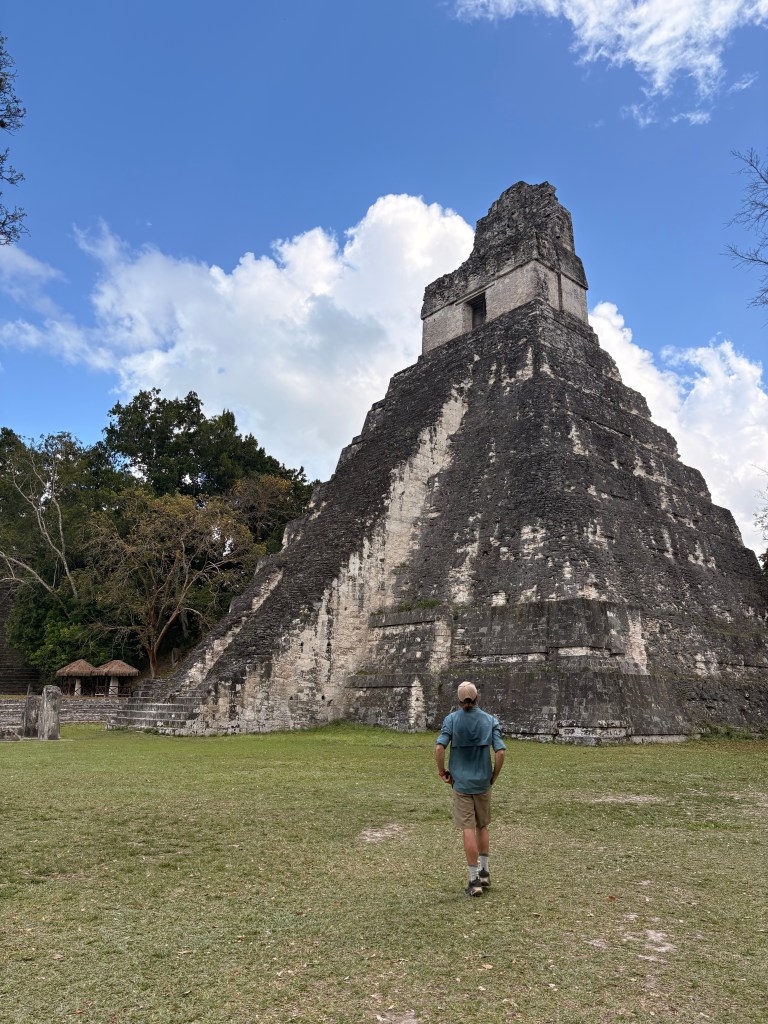
We spent the afternoon making our way slowly around the complexes, learning about Maya history, culture and science. We were given many chances to explore on our own, climbing up the structures and wandering through stone corridors. Despite the crowds, it was still a very enjoyable experience. Everyone there was in awe of the scale of the place.
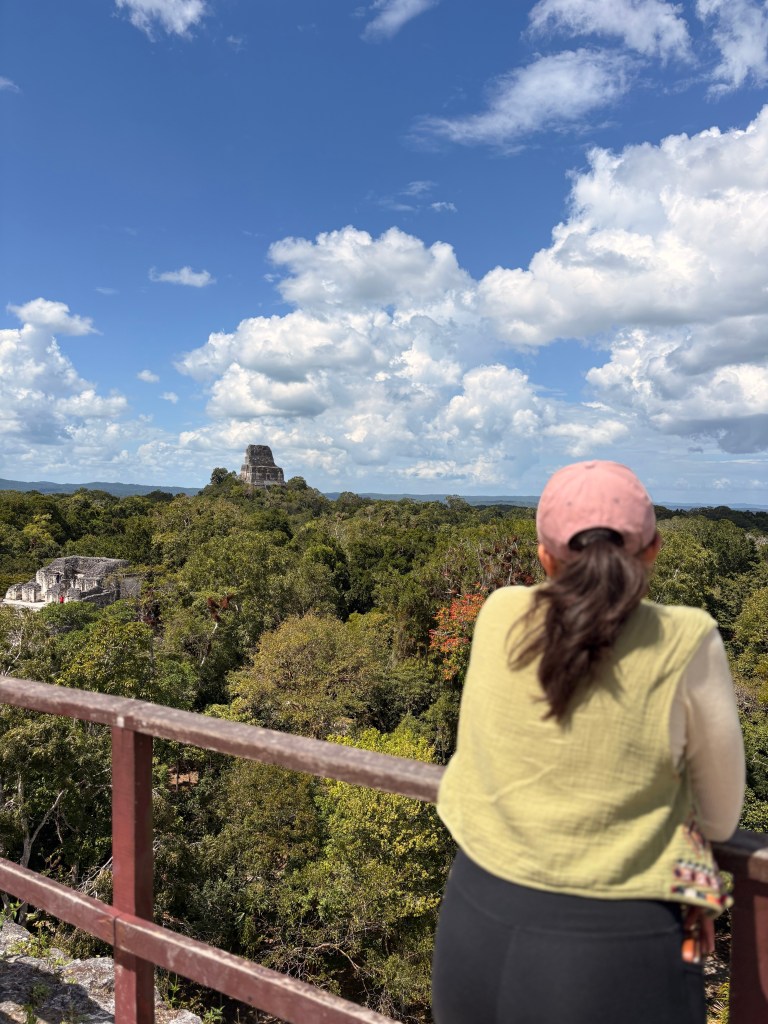
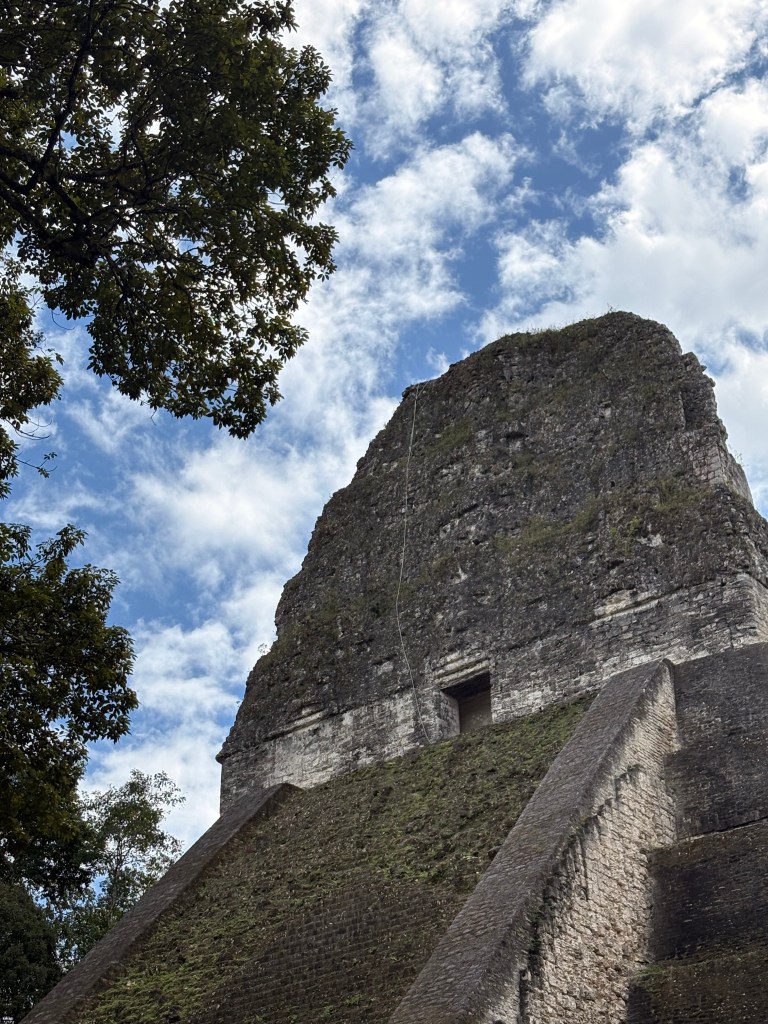
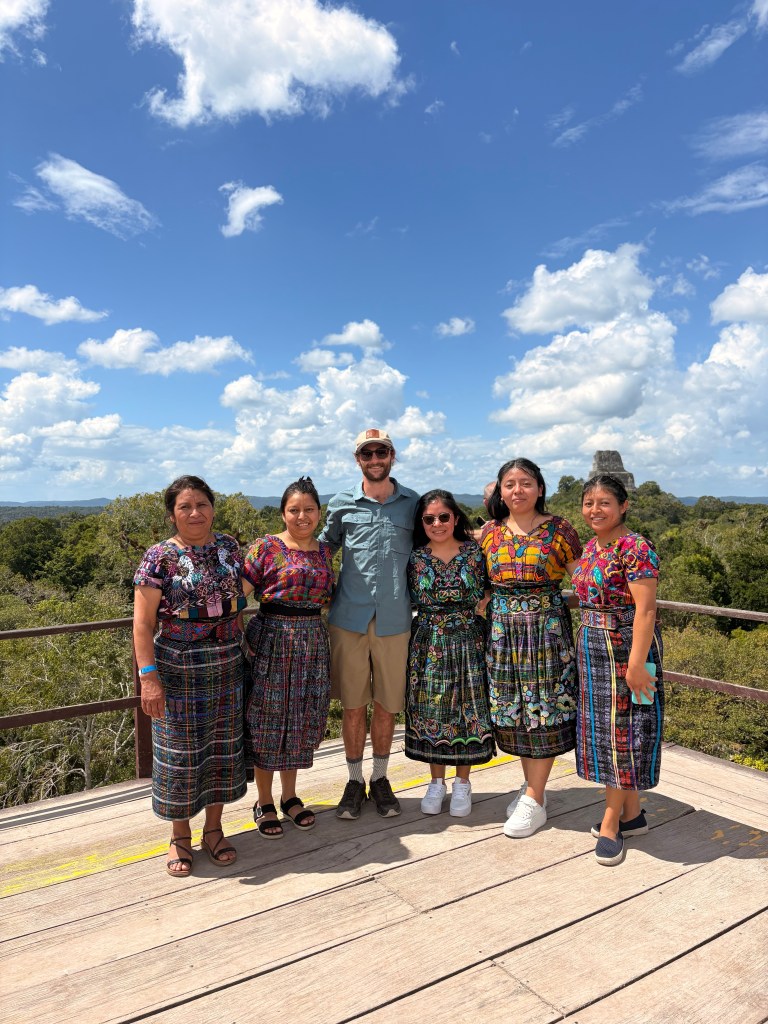
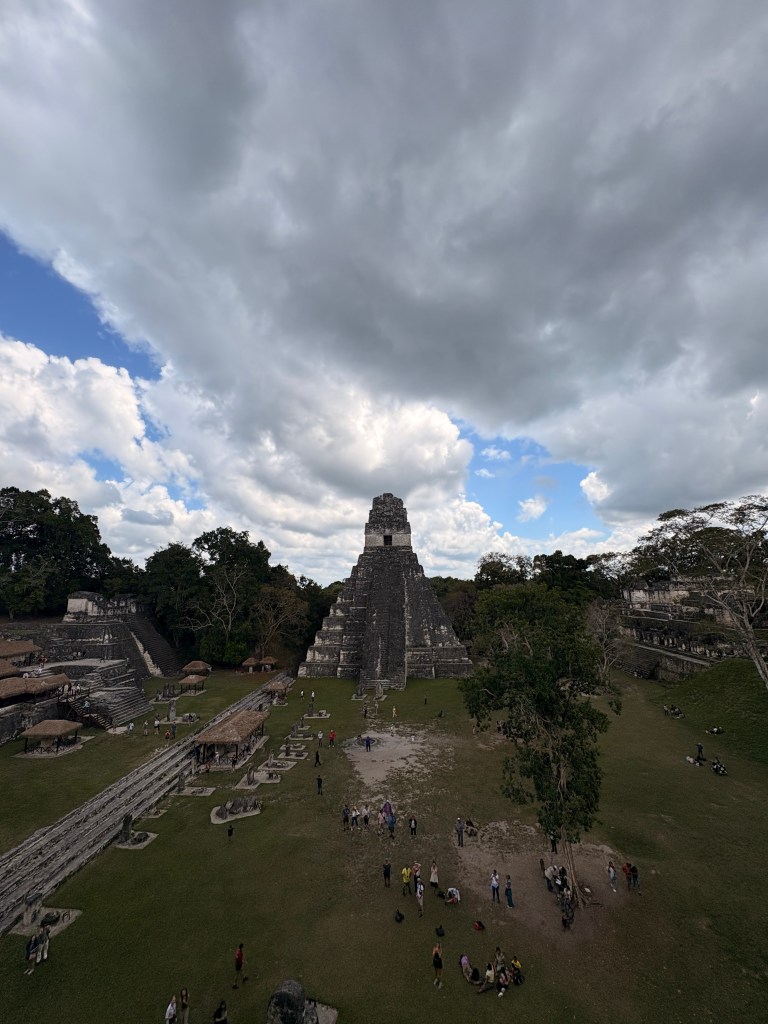
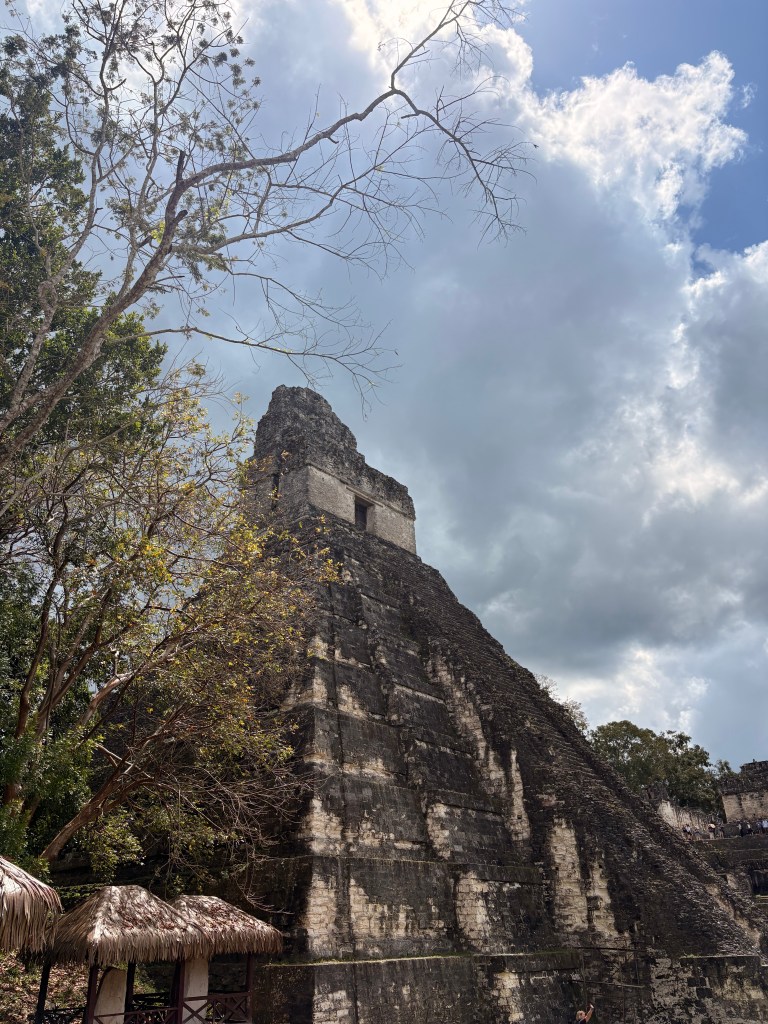
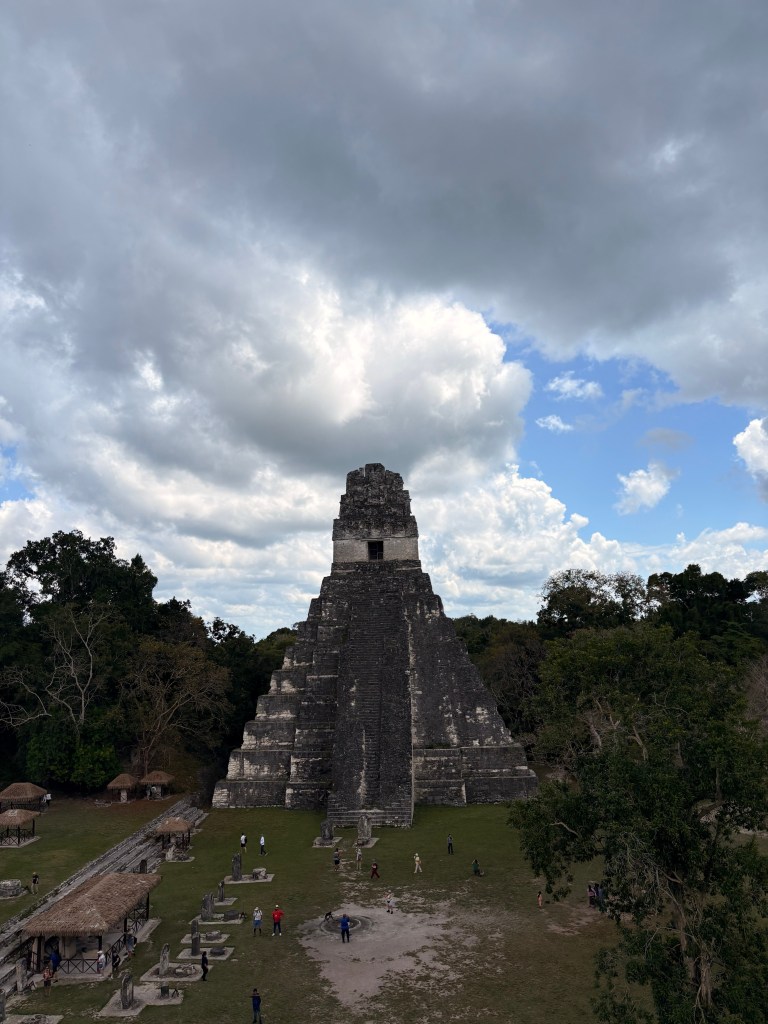
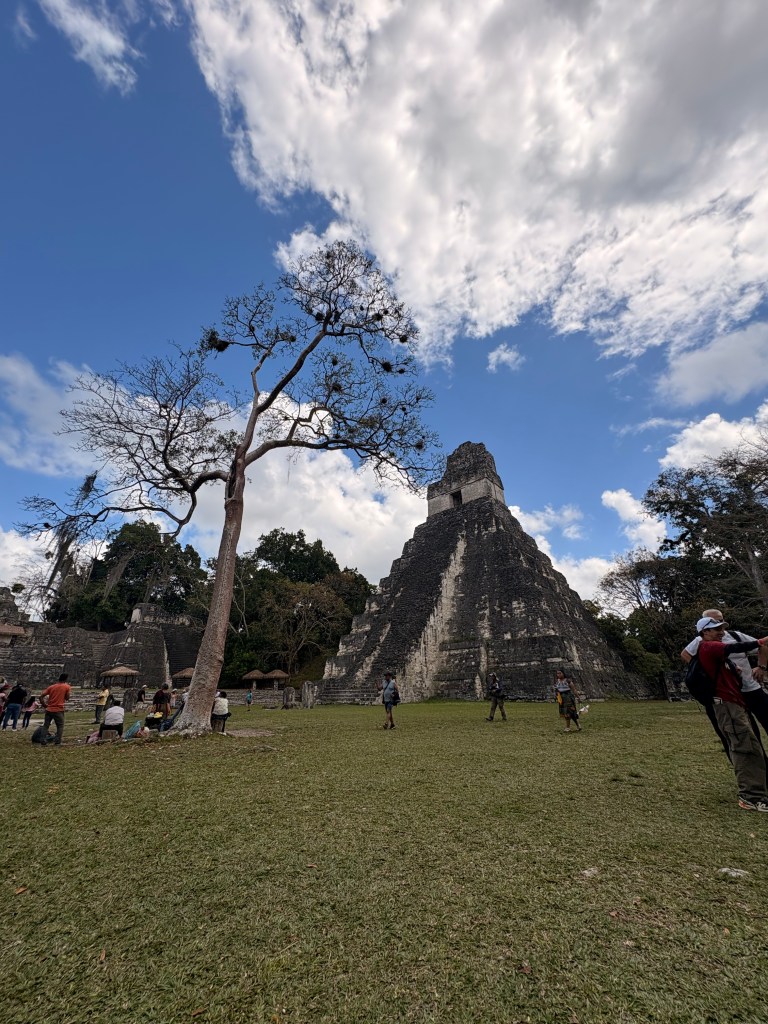
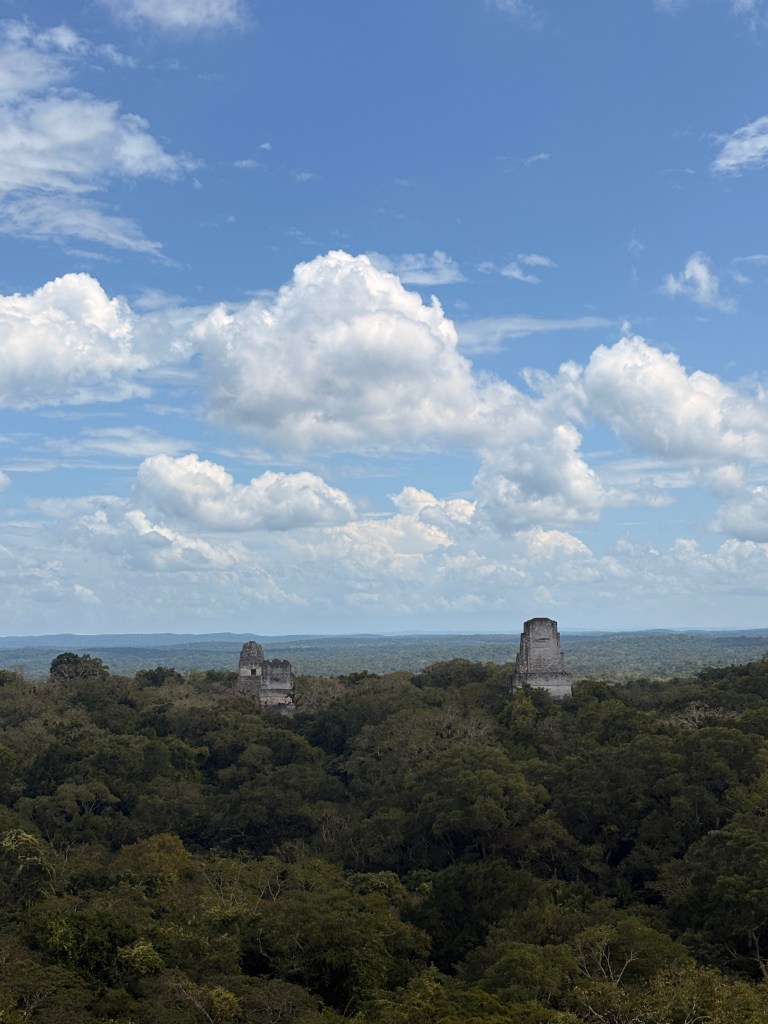
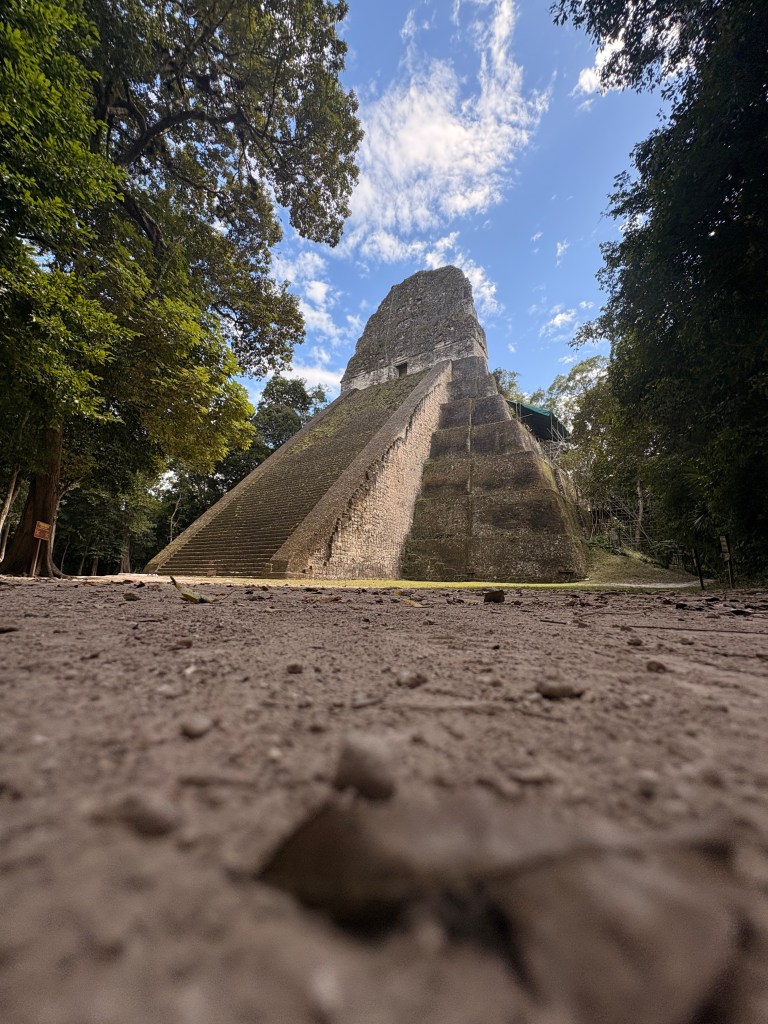
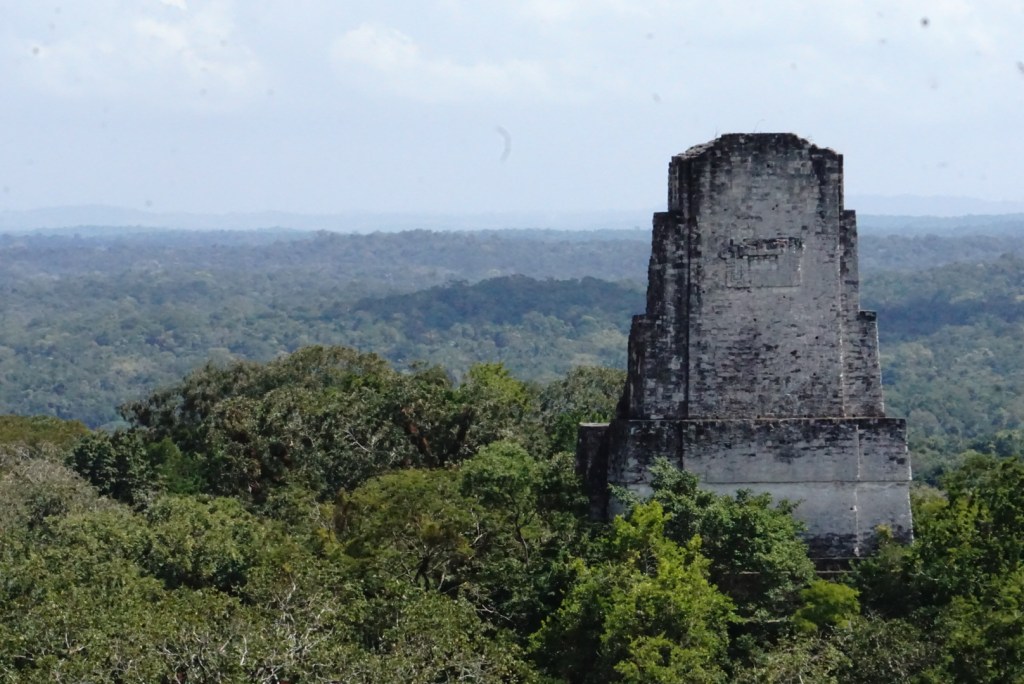
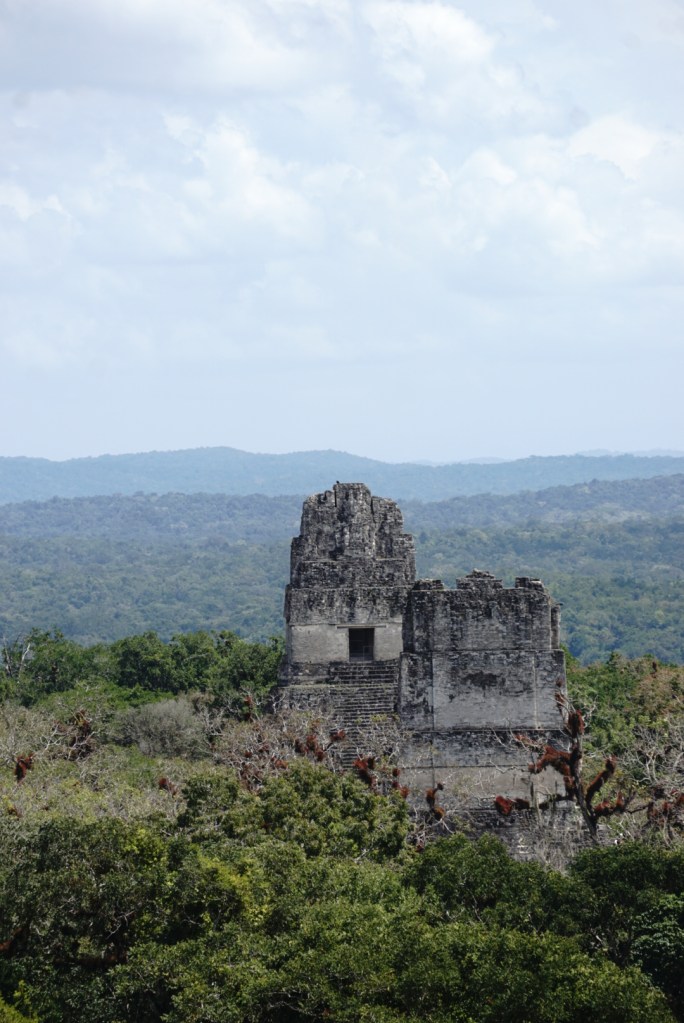
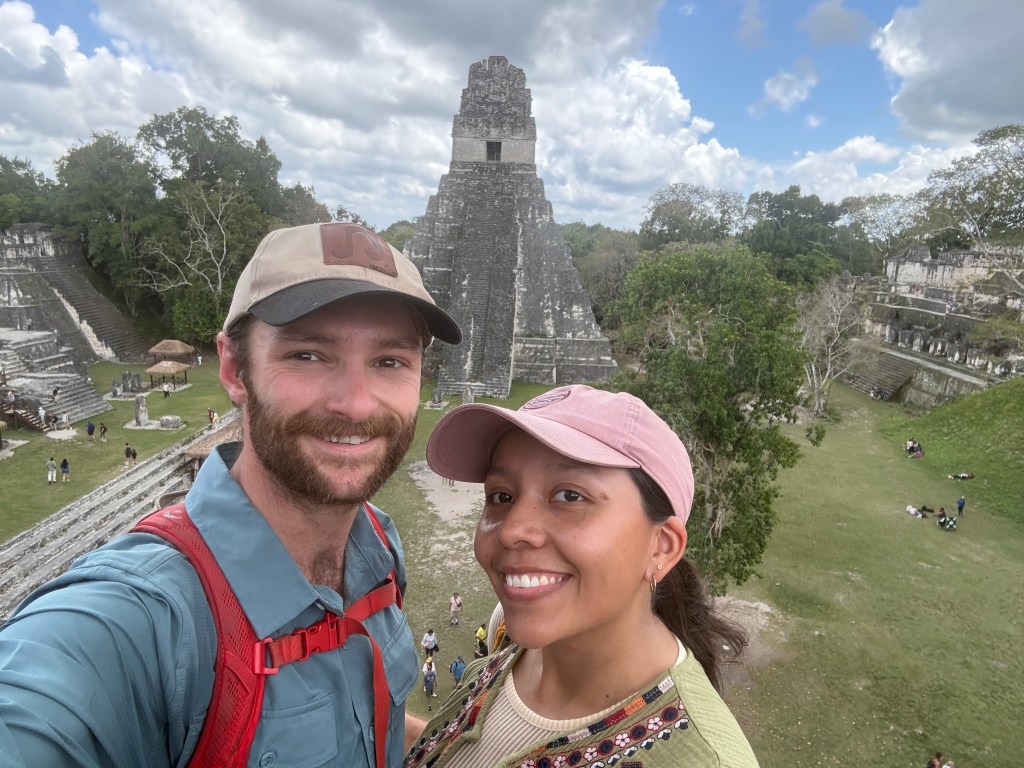
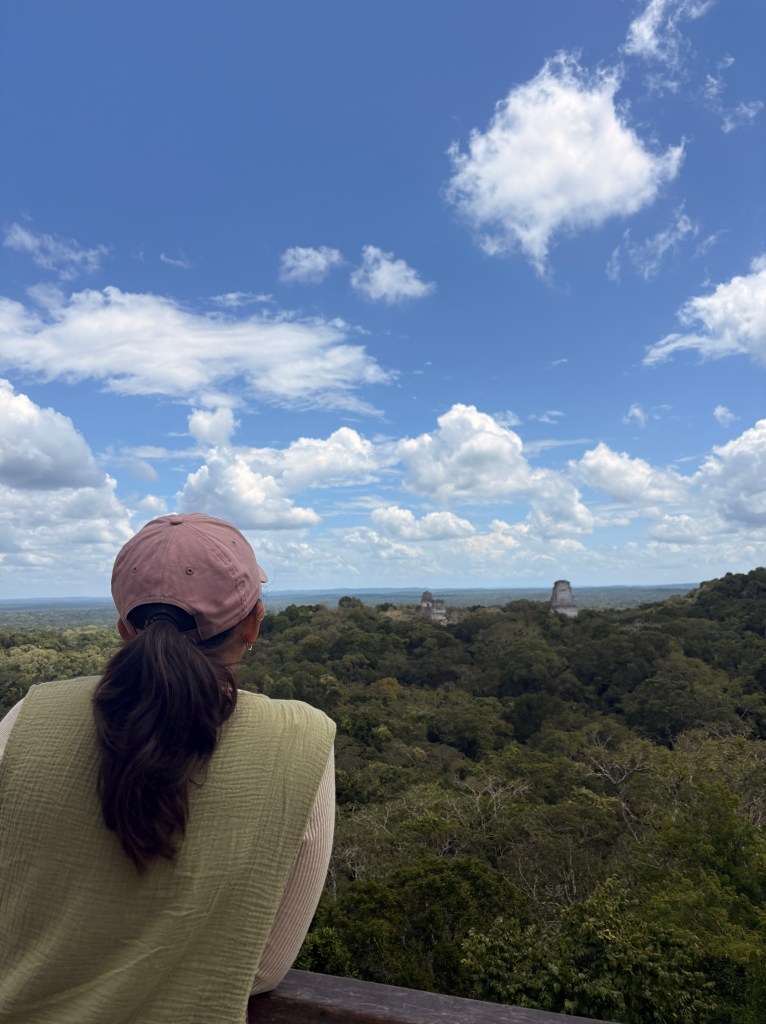
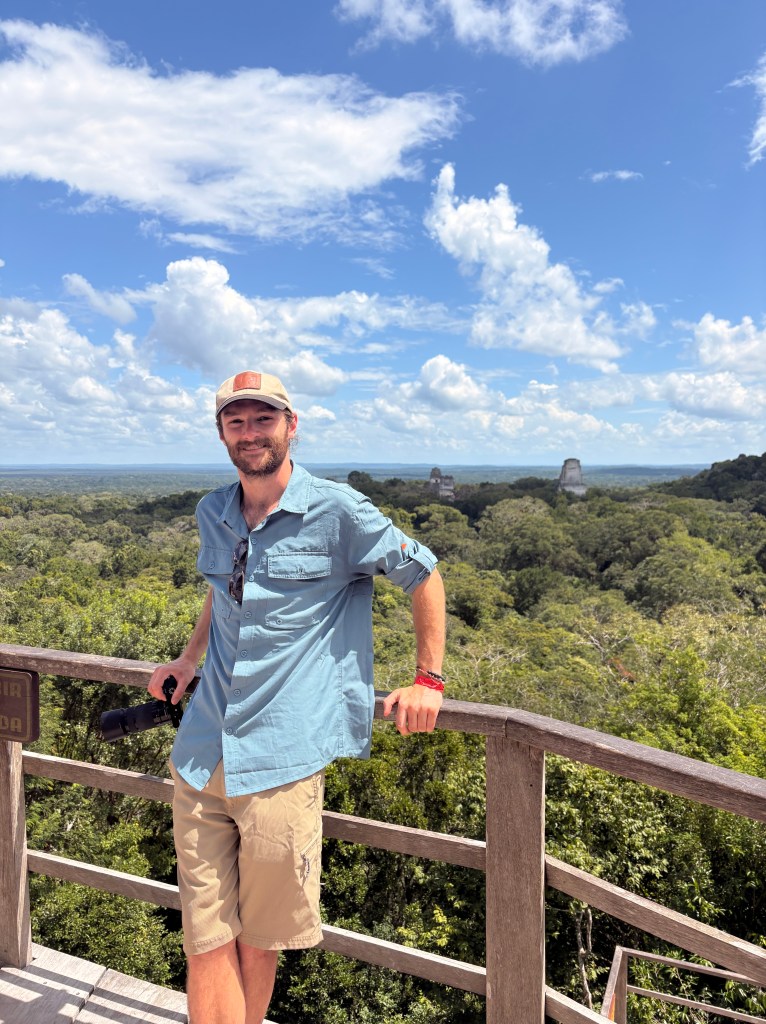
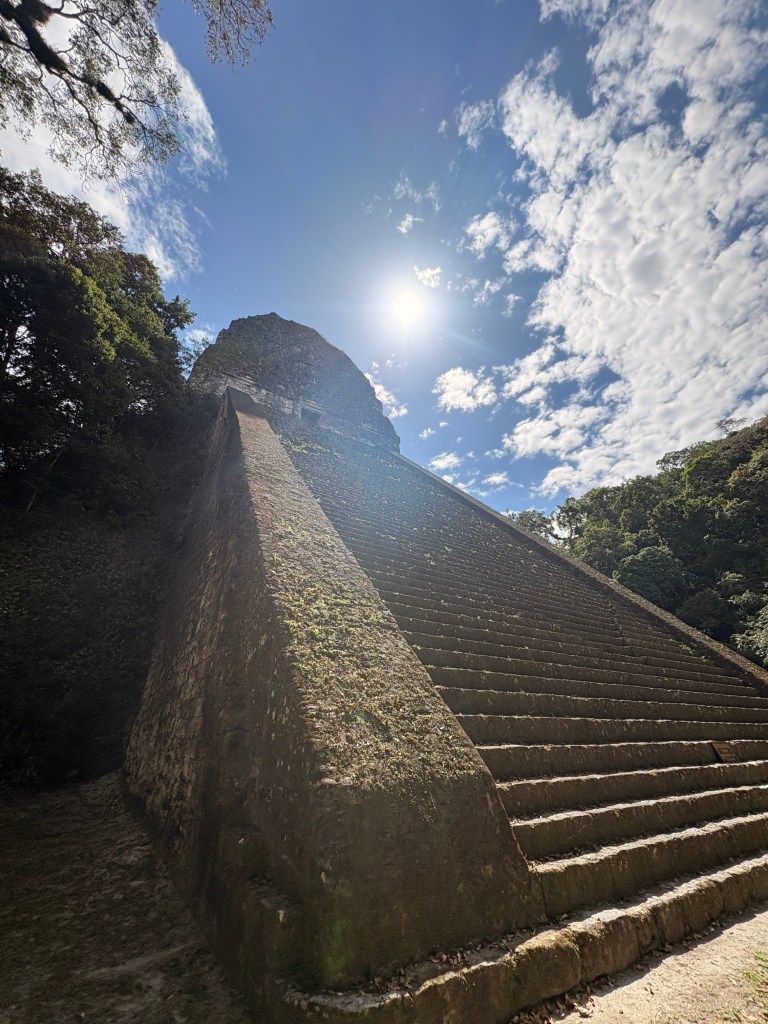
Before long, it was time to climb to the famous view point atop Temple IV, or Temple of the Two Headed Snake. It was a steep climb up a set of stairs winding around the left flank of the structure. We were high above the jungle canopy, gazing out for miles into toe Maya Biosphere. The sight was breathtaking. From here you can see Temple I: Temple of the Great Jaguar, Temple II: Temple of The Masks, Central & North Acropolis, Temple III: Temple of the Jaguar Priest and Temple V.
We took our photos and videos, but tried more so to take it all in by memory. What good is it to only experience such place behind a screen or camera lens?
 Stories of a Dirty Traveler
Leave a comment